


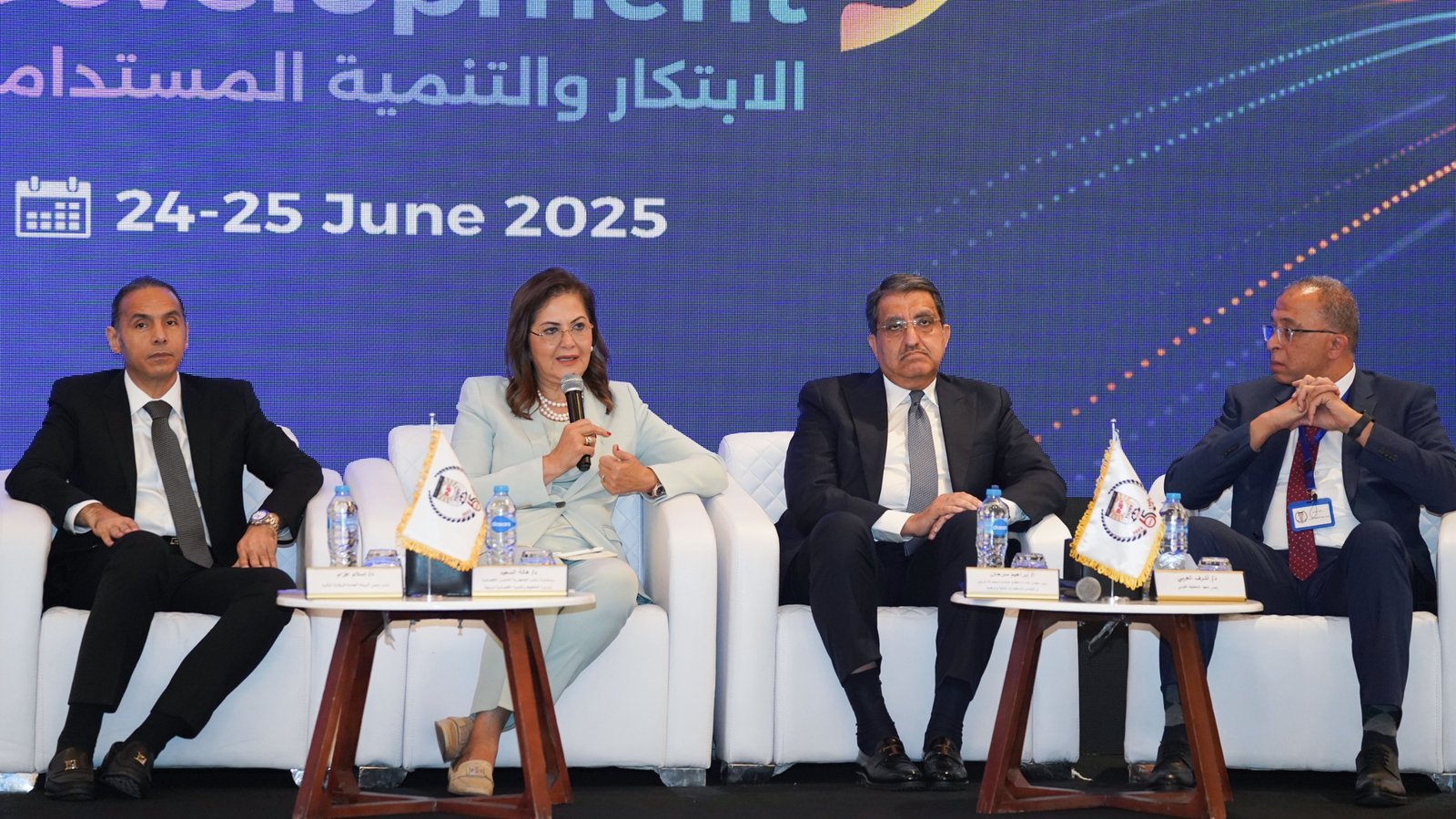
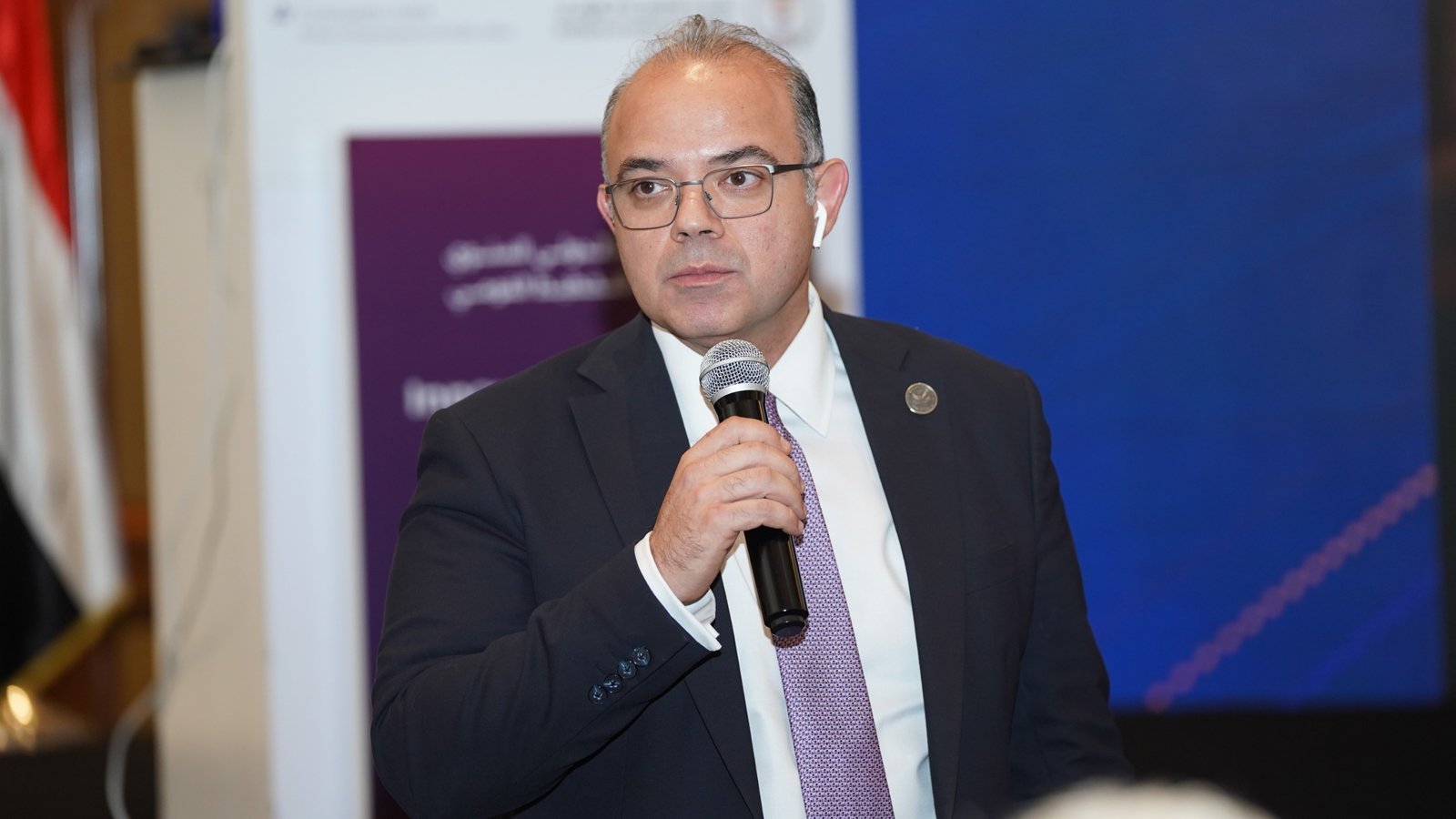
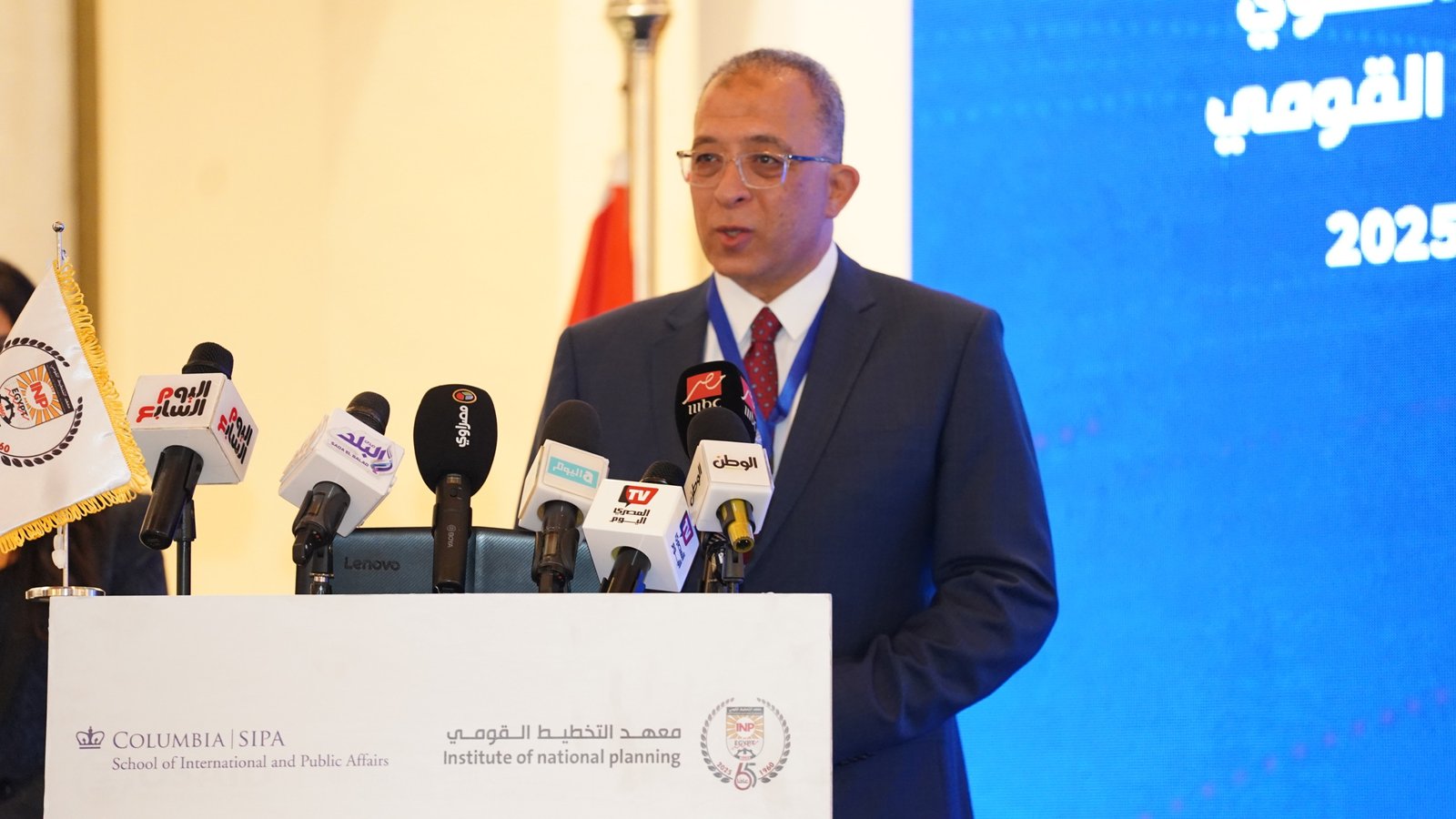
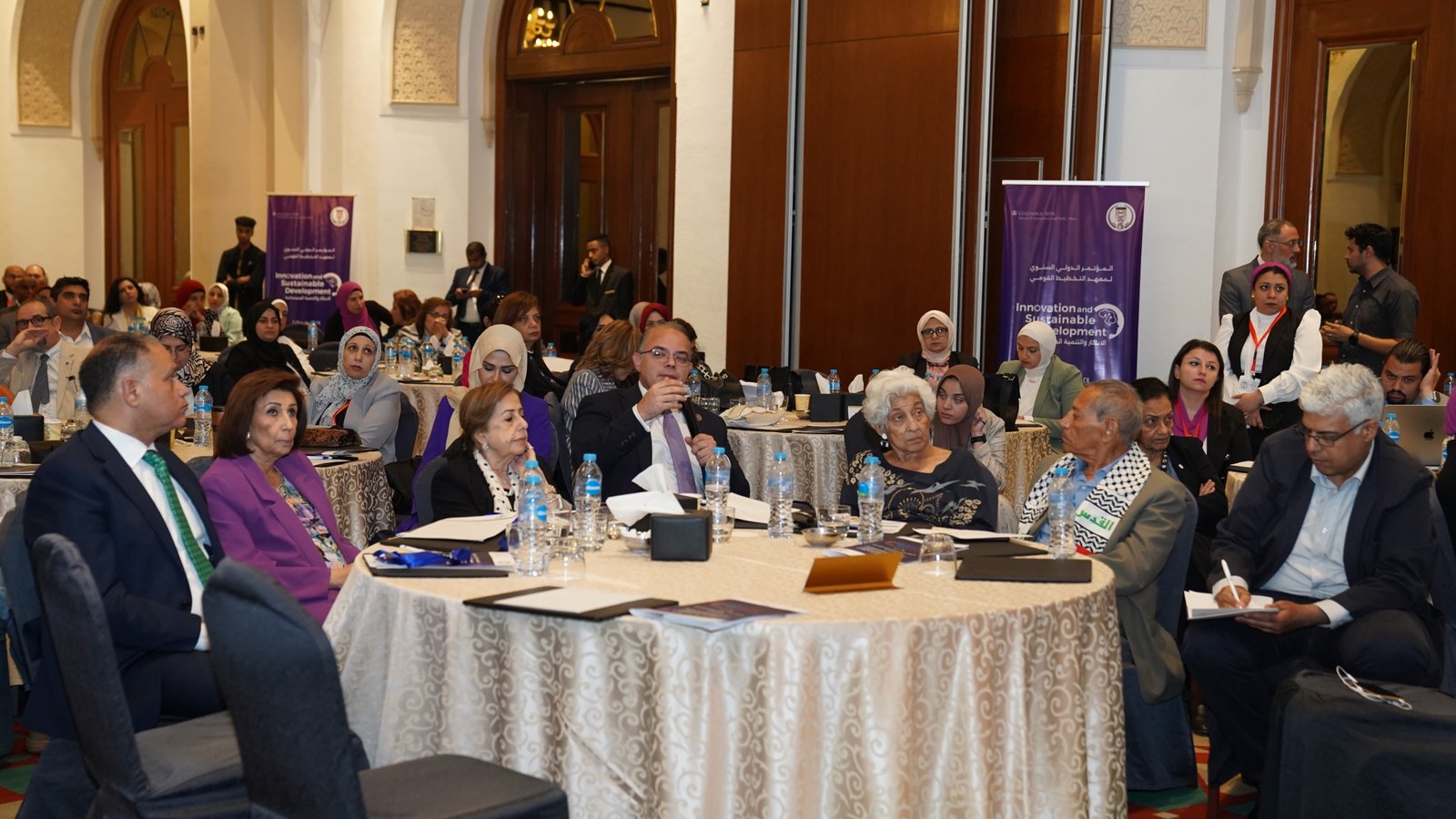
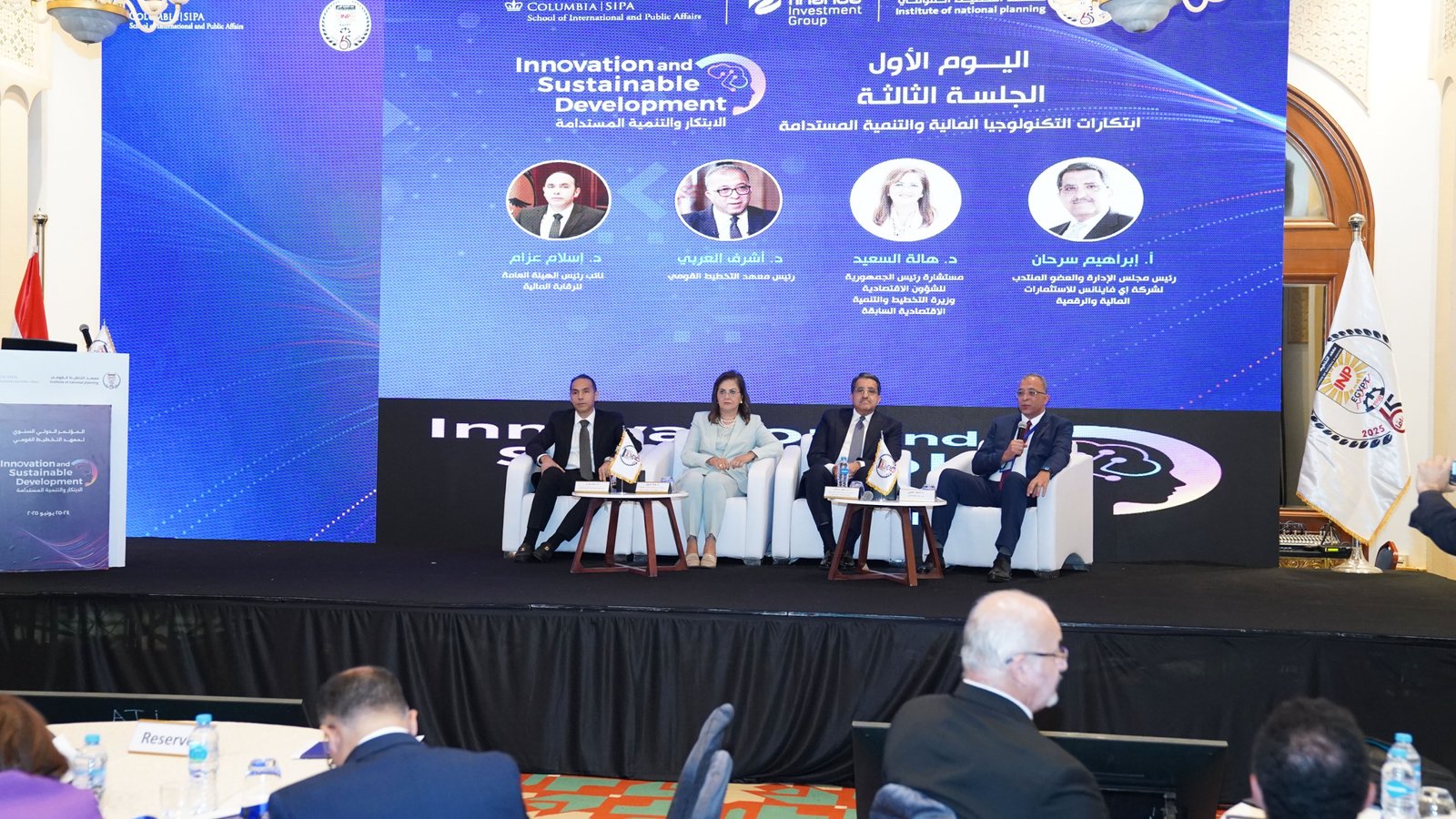
Cairo, June 24–25, 2024 – Under the title “Innovation and Sustainable Development,” the National Planning Institute (INP), in collaboration with Columbia University’s School of International and Public Affairs (SIPA), organized its annual international conference. The event featured a high-level dialogue session titled “Fintech Innovations and Sustainable Development,” chaired by Dr. Ashraf El-Araby, President of INP, with the participation of prominent experts and officials.
The session featured distinguished participants including Dr. Hala El-Said, Economic Advisor to the President of Egypt and former Minister of Planning and Economic Development; Dr. Mohamed Farid, Chairman of the Egyptian Financial Regulatory Authority (FRA); Dr. Islam Azzam, Vice Chairman of the FRA; and Mr. Ibrahim Sarhan, Chairman and Managing Director of eFinance for Digital and Financial Investments.
At the opening of the session, Dr. Ashraf El-Araby emphasized its objective to highlight the pivotal role of financial technology in achieving the multidimensional targets of sustainable development. He noted the discussion would showcase Egypt’s national efforts in advancing fintech, examine the Financial Regulatory Authority’s contributions to supporting technological innovations in finance, and outline a future roadmap informed by international best practices. Dr. El-Araby stressed the importance of addressing current challenges hindering the growth of Egypt’s fintech sector while leveraging global expertise to shape its strategic direction.
In her address, Dr. Hala El-Said emphasized the multifaceted impact of financial technology in achieving sustainable development objectives. She highlighted fintech’s crucial role in streamlining financial transactions, enhancing efficiency, and promoting financial inclusion by bringing more individuals into the formal financial system. Digital platforms, she noted, facilitate accessible financing solutions that encourage broader societal participation while supporting startup growth and e-commerce ecosystems. Dr. El-Said further explained how technological innovations enable precise target-group identification through financial analytics, facilitating evidence-based policymaking.
In outlining a strategic roadmap to support financial technology development in Egypt, Dr. Hala El-Said emphasized several critical priorities:
Cybersecurity Investments: Strengthening digital security frameworks to safeguard financial systems and build user trust.
Adaptive Regulations: Developing flexible, technology-responsive legislation that keeps pace with rapid fintech innovations.
Streamlined Digital Governance: Implementing coherent and simplified digital governance structures to enhance efficiency and transparency.
Inclusive Digital Infrastructure: Expanding and upgrading technological infrastructure across all regions to bridge the existing digital divide.
High-Quality Data Systems: Ensuring the availability of reliable, high-standard data to optimize fintech applications and decision-making.
Human Capital Development: Intensifying investments in workforce training to cultivate skilled professionals and create quality employment opportunities in the digital economy.
Dr. El-Said underscored that these measures are essential to position Egypt as a competitive player in the global fintech landscape while fostering sustainable and inclusive economic growth.
Dr. Mohamed Farid outlined the Financial Regulatory Authority’s (FRA) ongoing efforts to advance digital transformation in the non-banking financial sector through continuous regulatory updates. He detailed licensing requirements for fintech-based non-banking financial activities, emphasizing necessary technological infrastructure, information systems, and security measures. The FRA has introduced key regulatory provisions including digital identity frameworks, smart contracts, and digital record-keeping systems.
Dr. Islam Azzam highlighted the Financial Regulatory Authority’s (FRA) ongoing efforts to accelerate the digitization of non-banking financial transactions, aligning with Egypt’s national vision for financial inclusion. These initiatives aim to broaden access to non-banking financial services, enabling more citizens to improve their economic conditions and achieve their investment, financing, and insurance aspirations.
He further noted that the FRA is actively developing mechanisms to foster fintech innovation, with a focus on boosting savings and investment rates by enhancing middle-class wealth. Key measures include assisting insurance companies in establishing actuarial pricing frameworks for their products and supporting fintech startups through reduced capital requirements, among other facilitative policies implemented by the authority. These efforts collectively strengthen Egypt’s financial ecosystem while promoting inclusive economic growth.
Mr. Ibrahim Sarhan highlighted the pivotal role of the National Payments Council, established in 2018 under the presidency of Egypt’s leader and comprising key ministries and the Central Bank, in enabling eFinance’s successful integration into the government’s digital framework. This strategic initiative has created valuable data assets that are now propelling Egypt’s transition toward sophisticated digital transformation and AI adoption. Sarhan identified five critical success factors for Egypt’s digital evolution: developing resilient technological infrastructure, transforming workforce mentalities and workplace culture, executing visionary national projects, building comprehensive beneficiary databases for targeted support distribution, and achieving full financial inclusion.
The conference notably featured participation from Dr. Rania Al-Mashat, Minister of Planning and Economic Development and Chairperson of INP’s Board of Trustees, along with former ministers, distinguished experts, and representatives from international organizations specializing in innovation and scientific research. This high-level gathering underscored Egypt’s commitment to positioning fintech as a strategic enabler of sustainable development goals.