


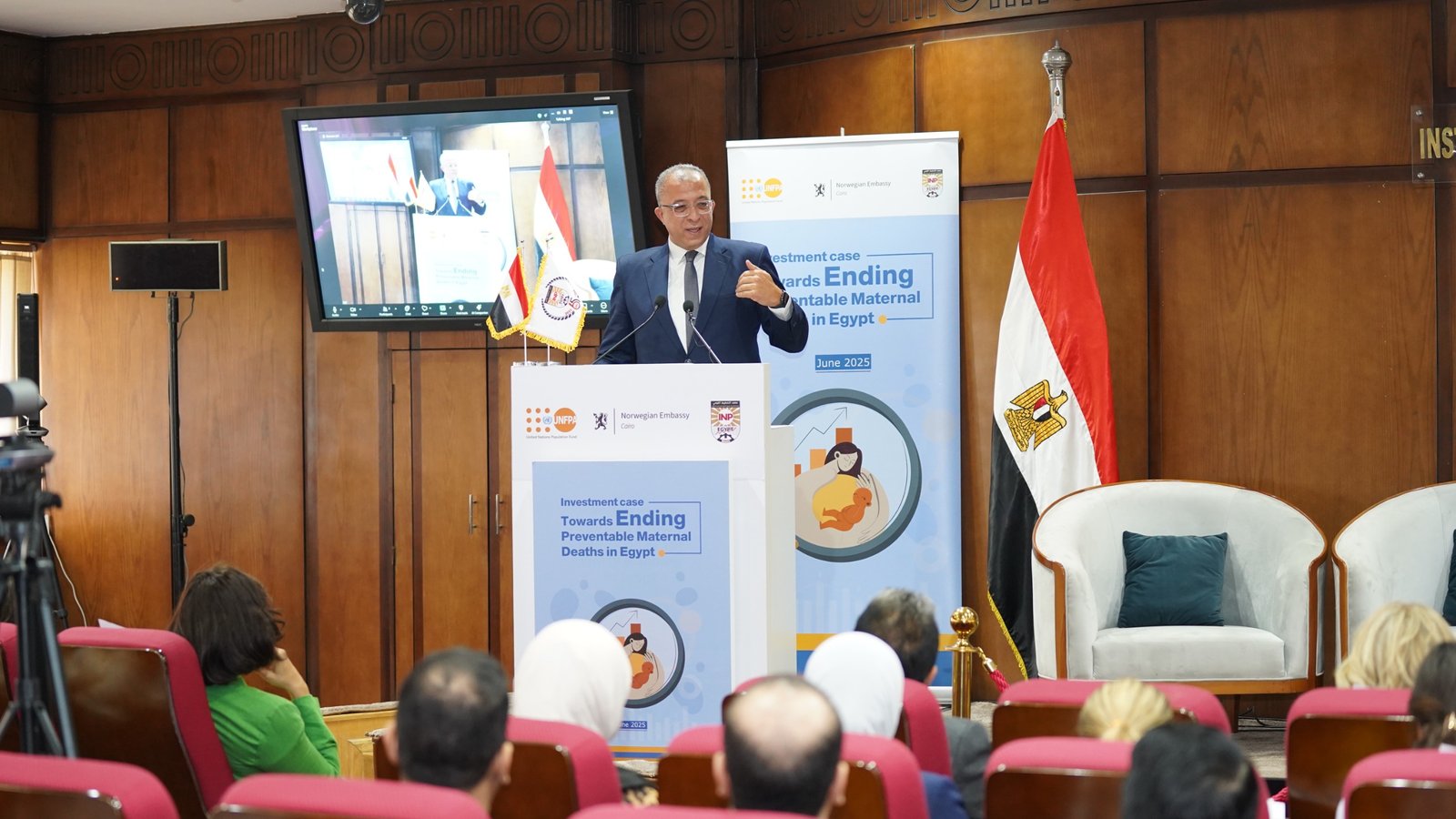
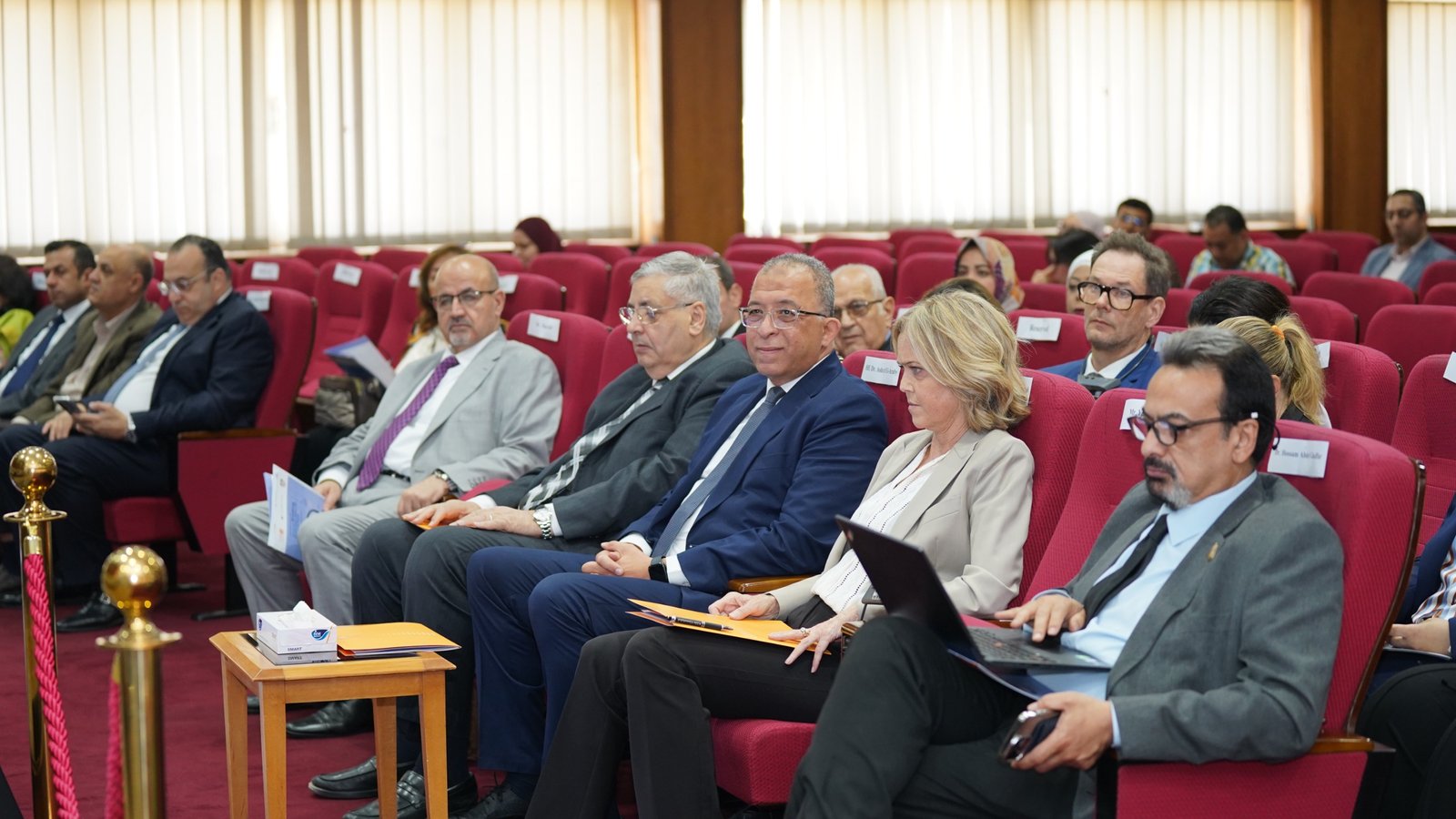
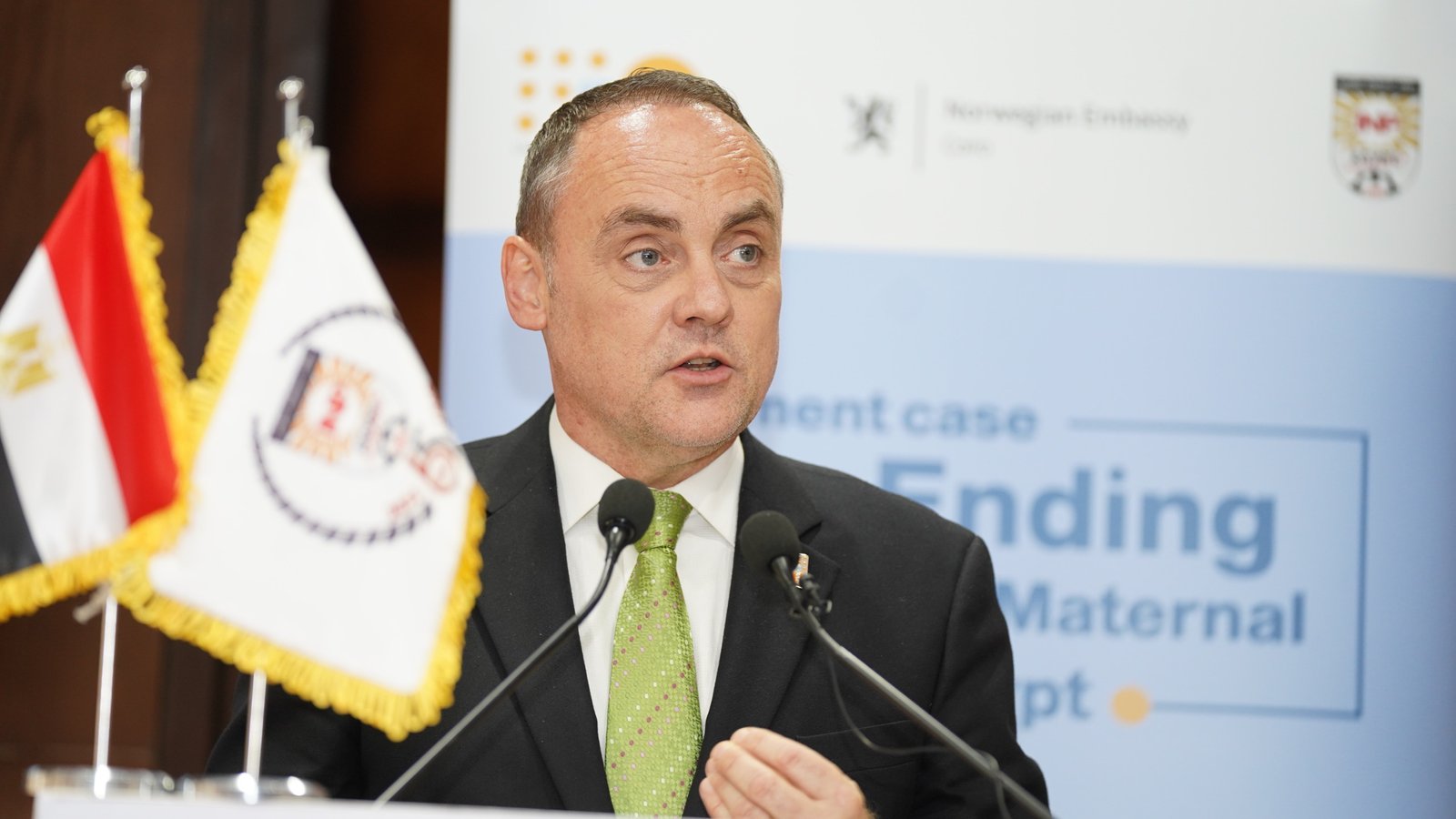
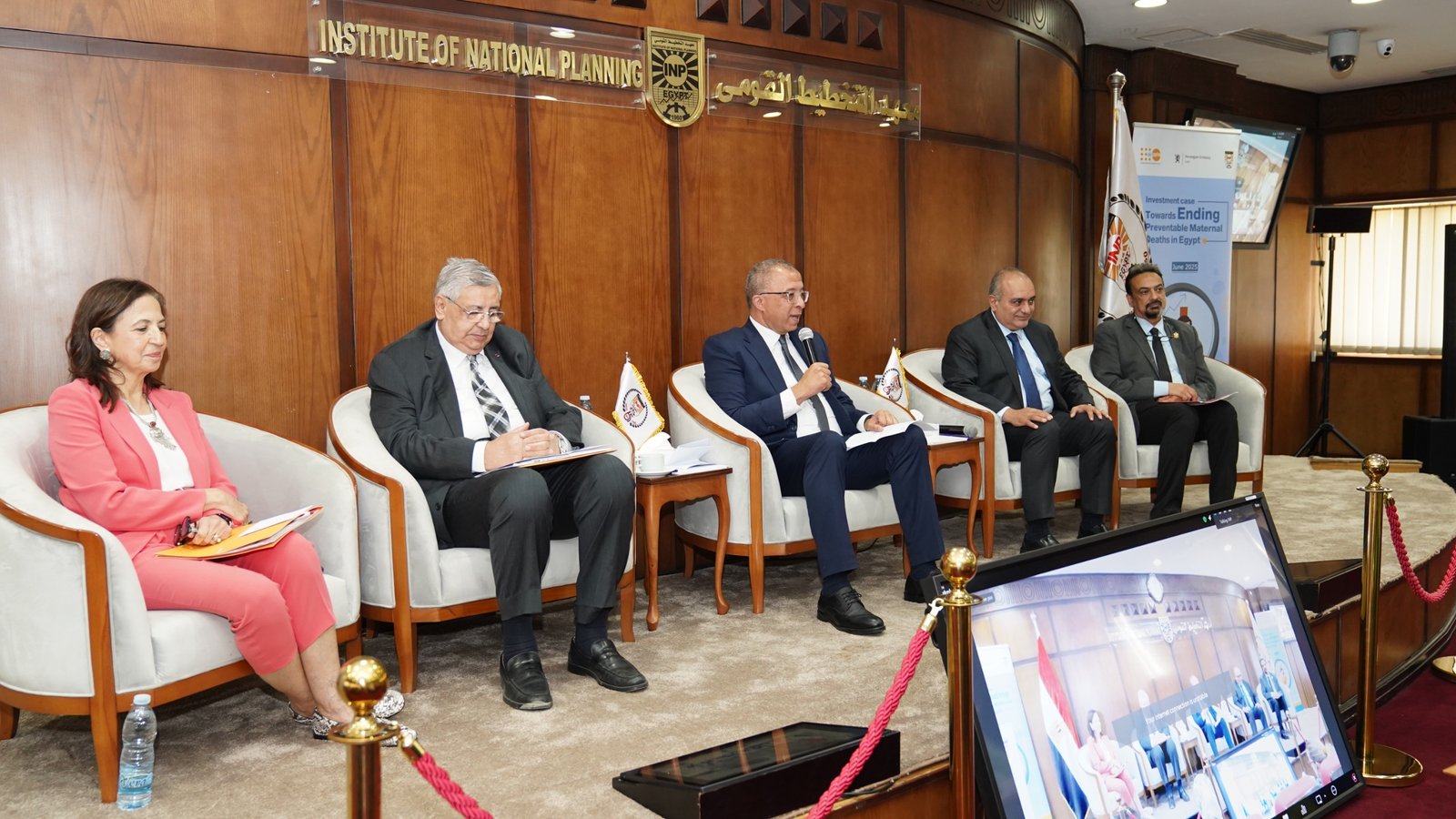
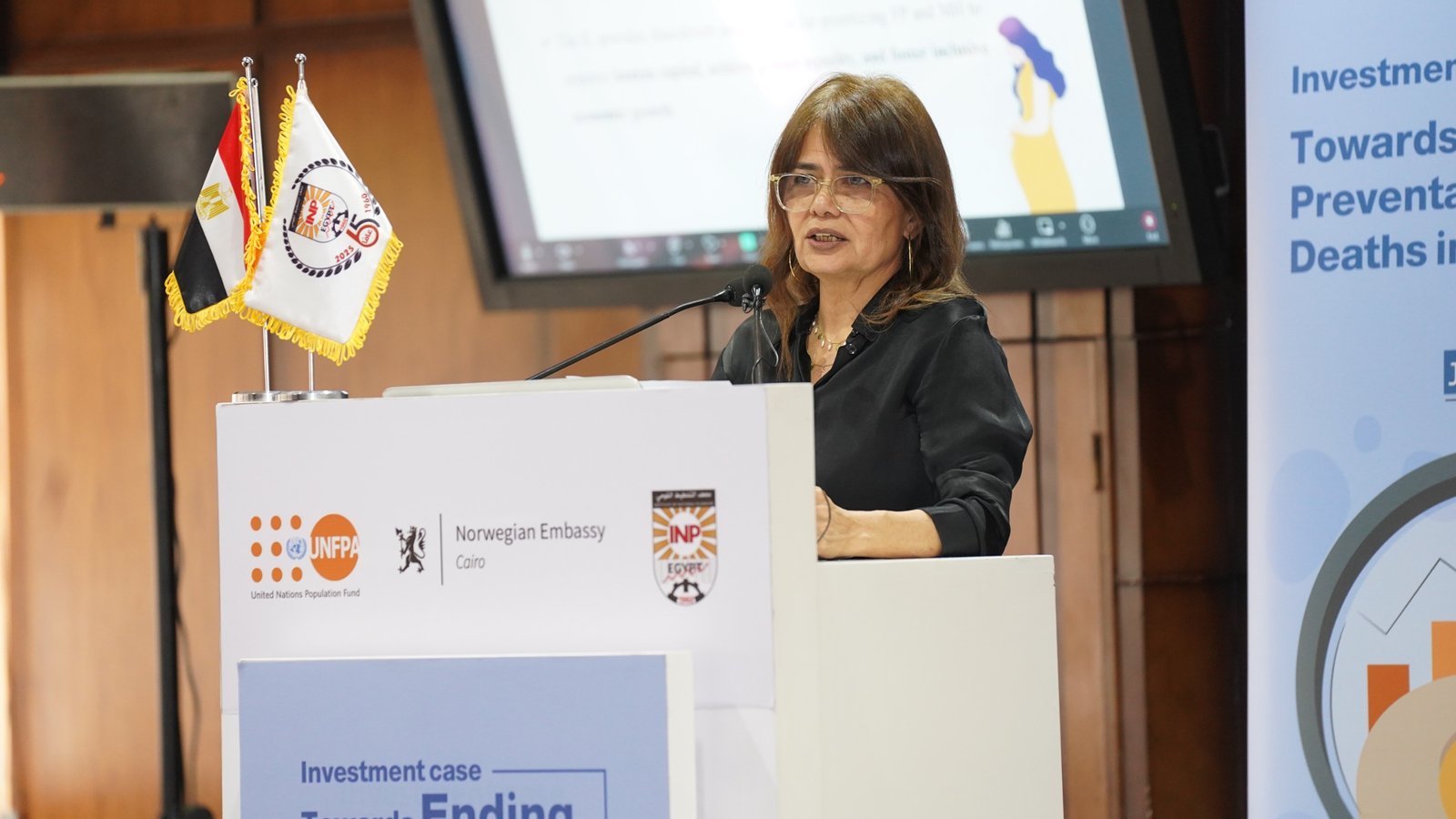
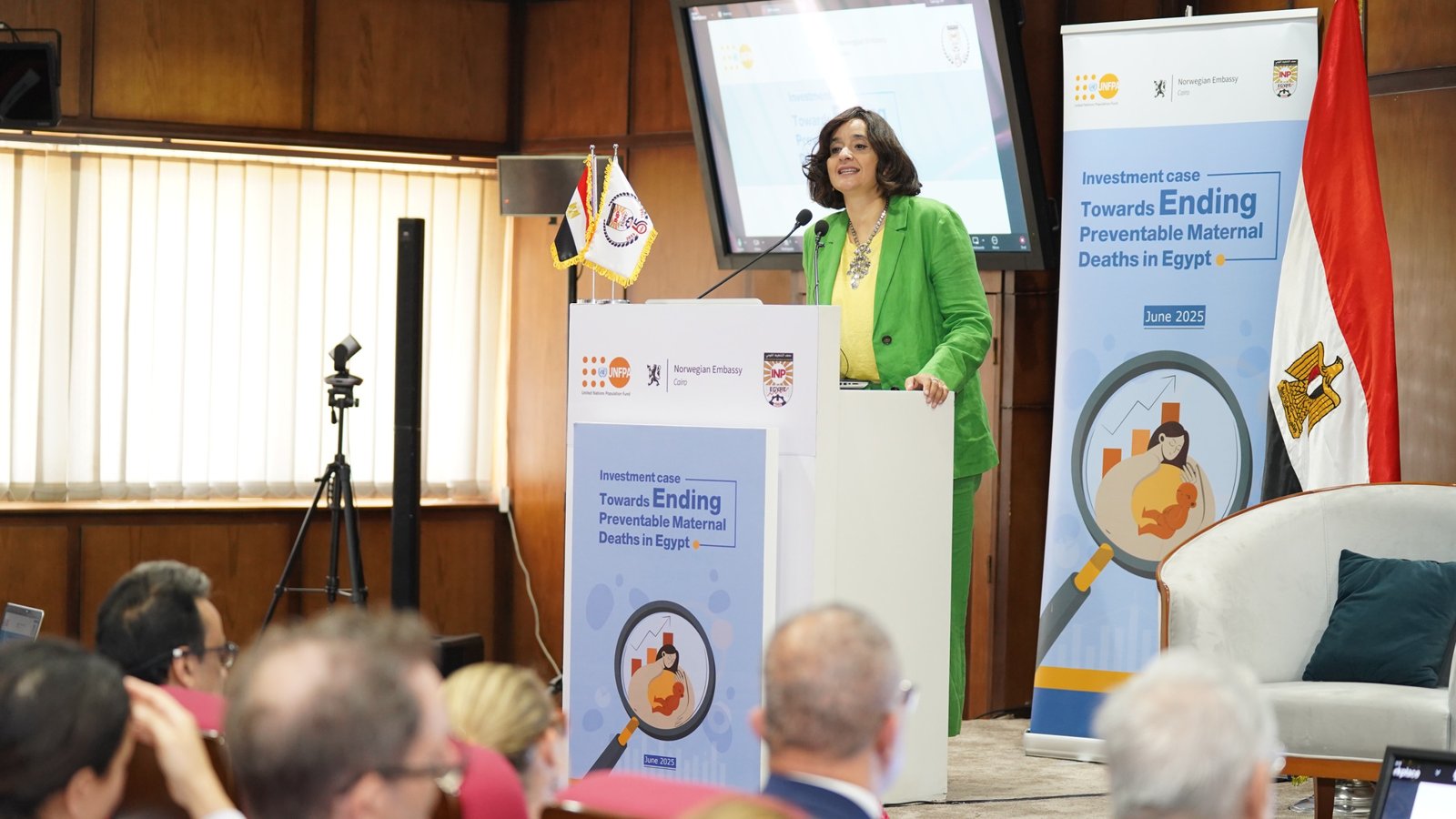
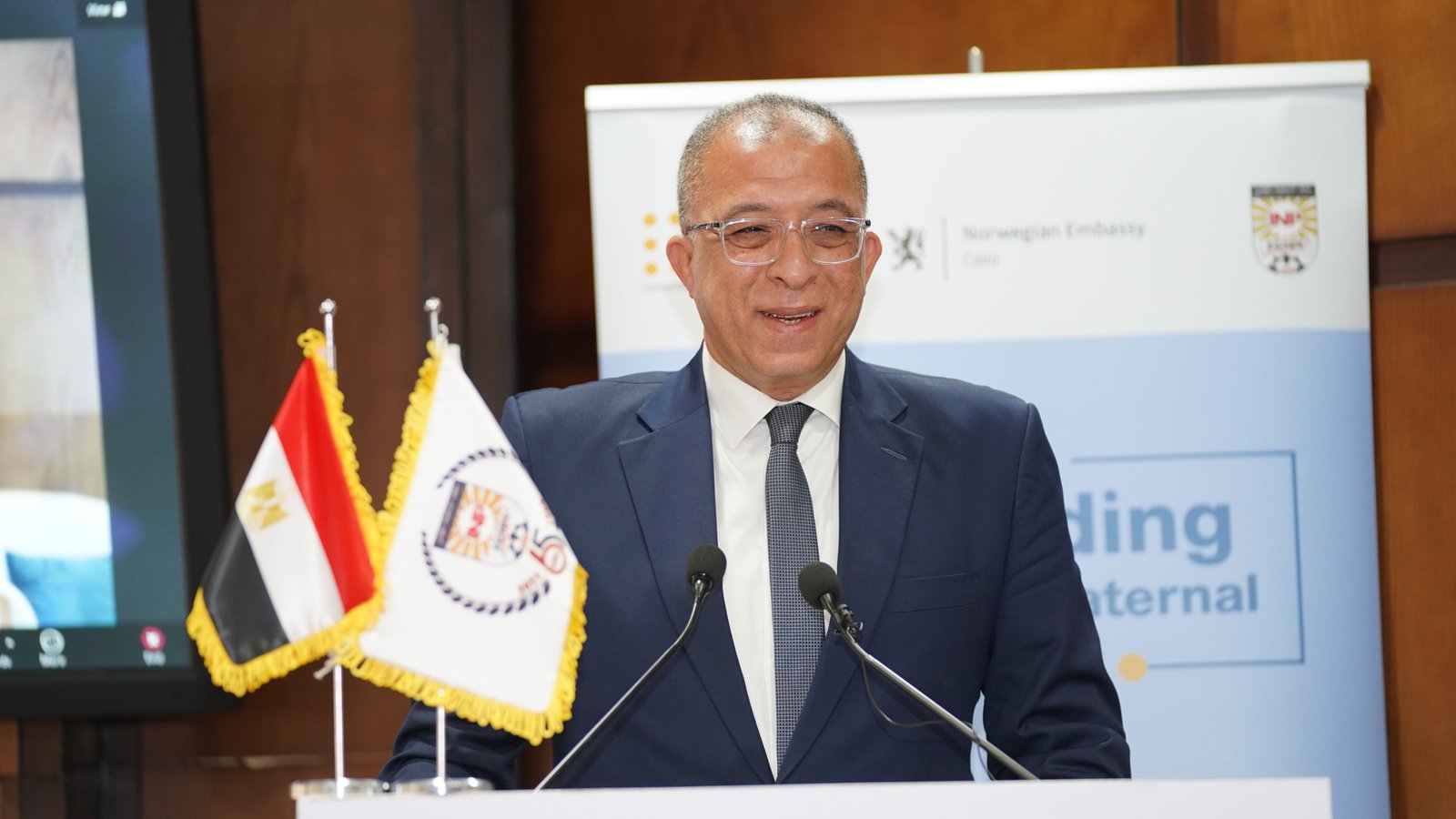
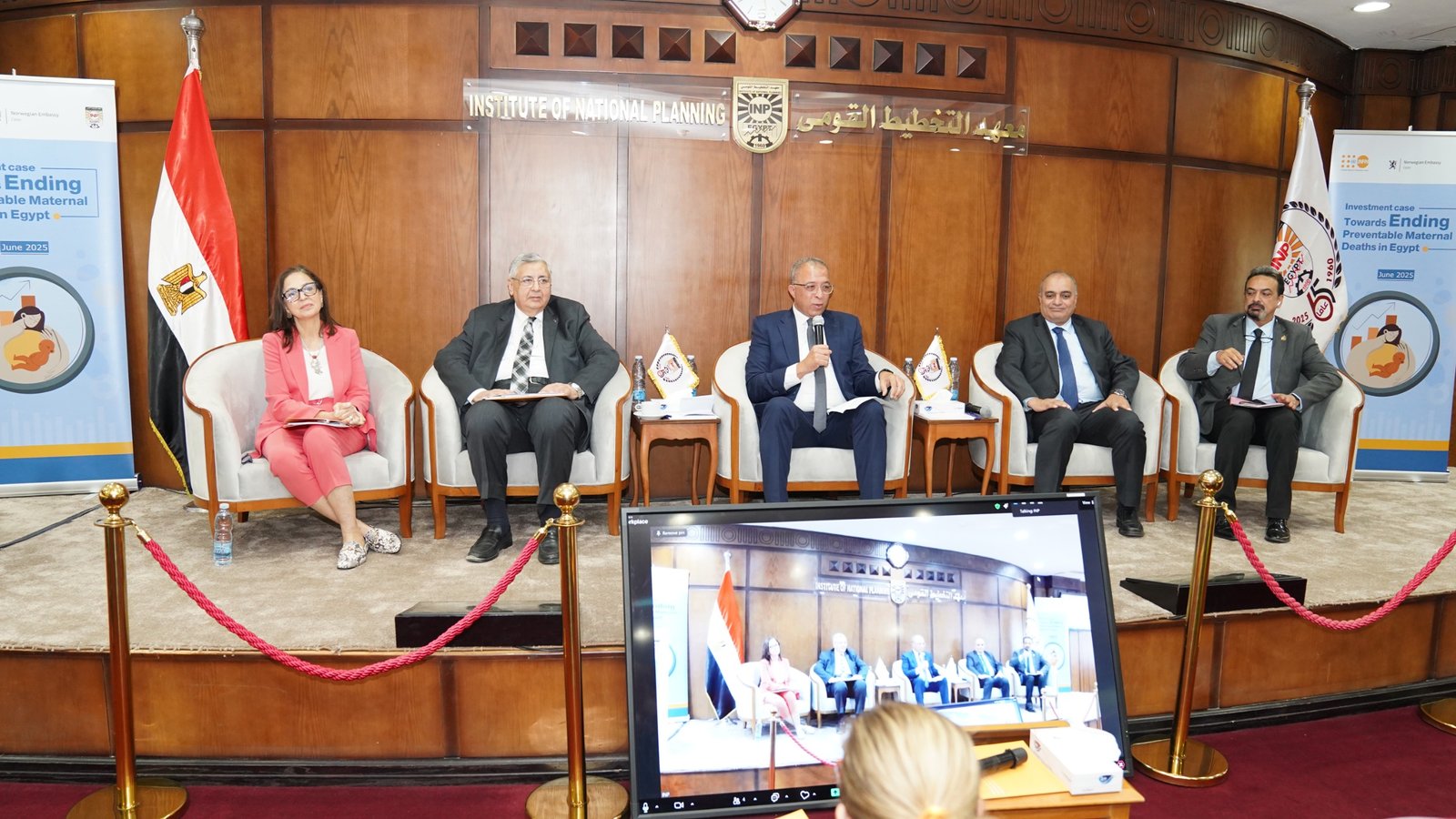
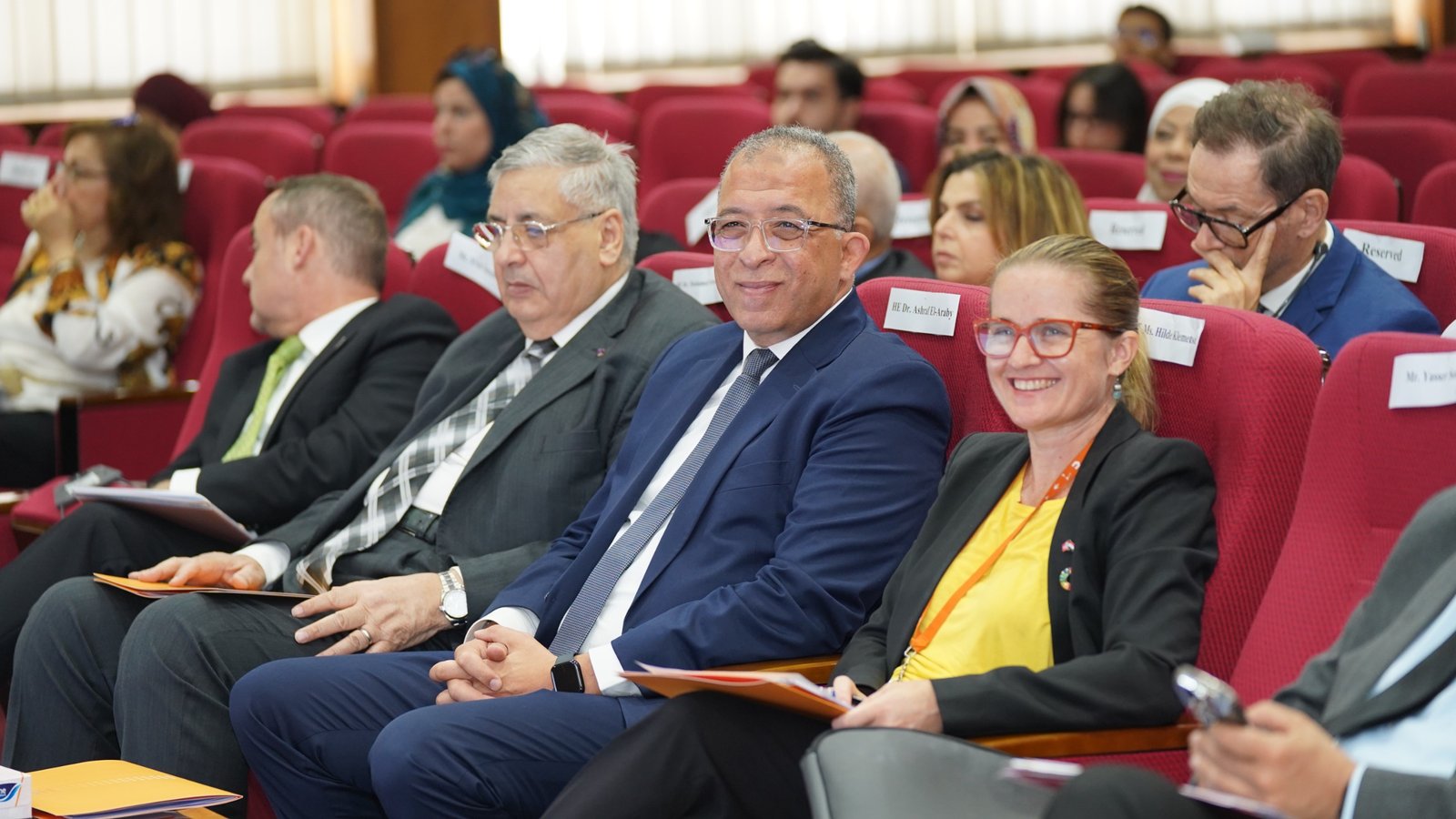
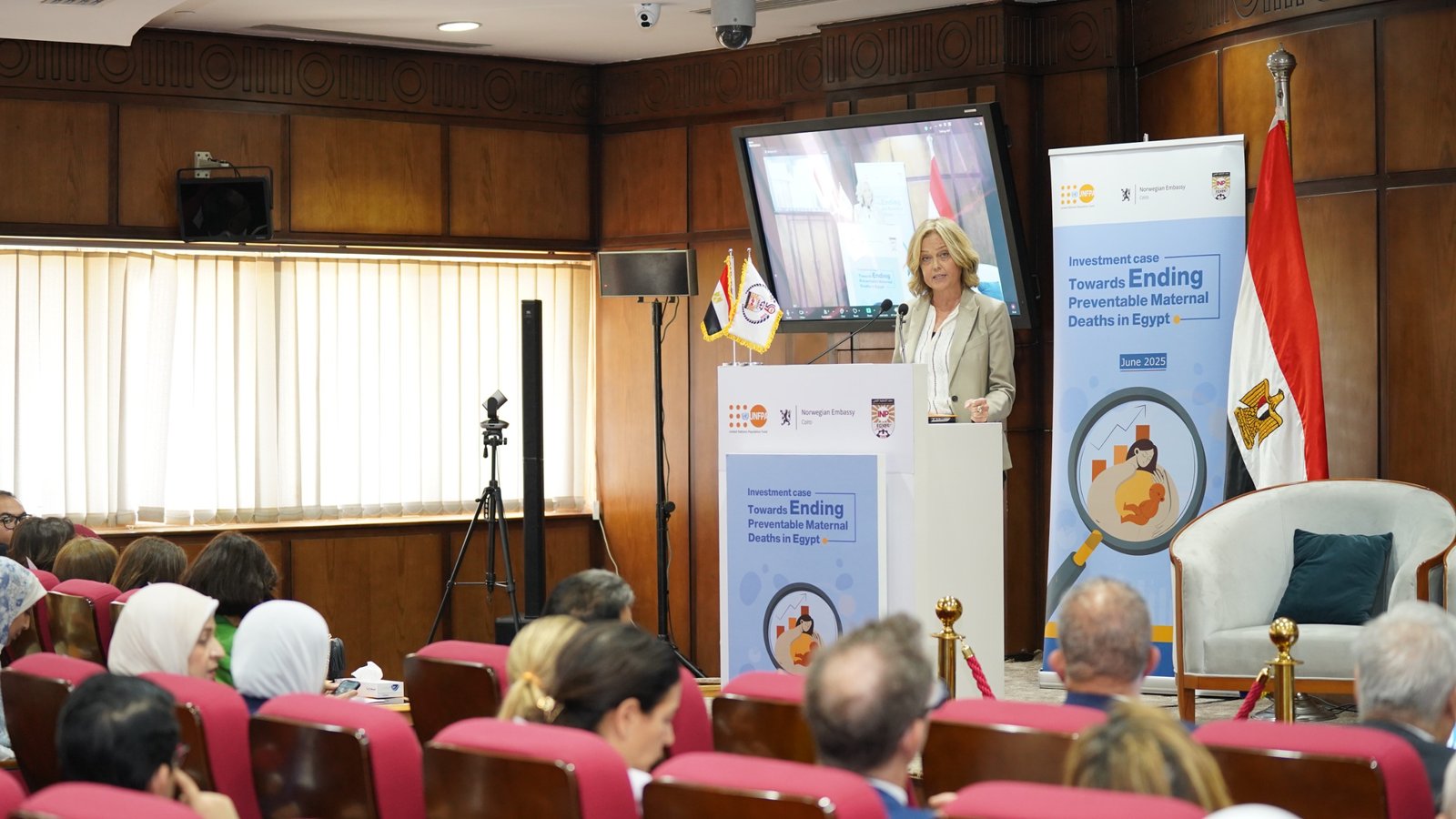
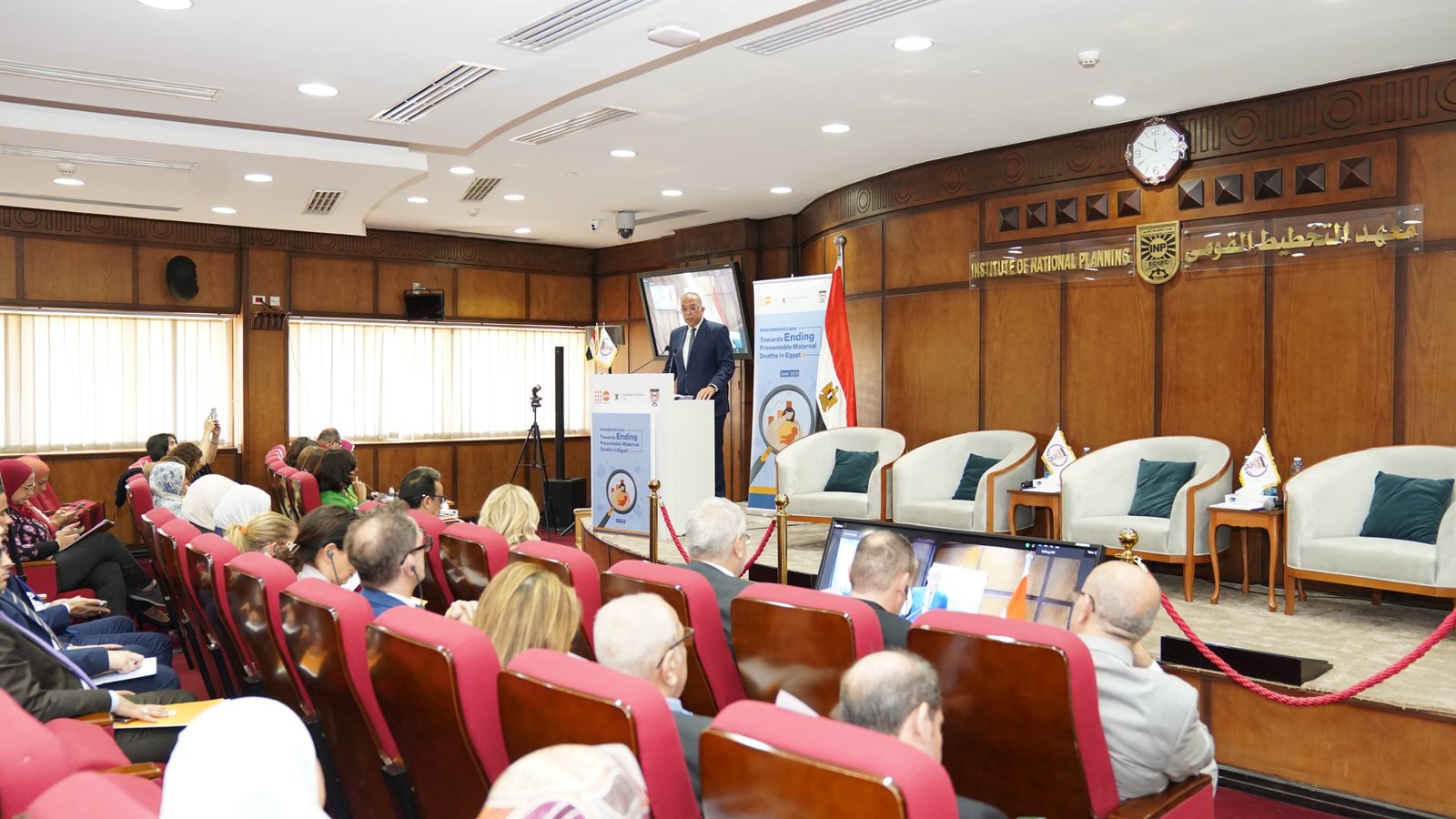
Sunday, 1 June 2025 — The Institute of National Planning (INP) launched a landmark study titled “Investing to End Preventable Maternal Mortality in Egypt” in collaboration with the United Nations Population Fund (UNFPA). The launch event was attended by Prof. Dr. Ashraf El-Araby, President of INP; Mr. Ives Sassenrath, UNFPA Representative; H.E. Hilde Klemetsdal, Ambassador of Norway to Egypt; Dr. Mohamed Awad Tag El-Din, Health Advisor to the President of Egypt and Former Minister of Health and Population; Dr. Hossam Abdel Ghaffar, Assistant Minister for Health Sector Reform and Official Spokesperson of the Ministry of Health and Population; Mr. Yasser Sobhy, Deputy Minister of Finance for Fiscal Policies; Prof. Dr. Hala Abu Ali, Advisor to the INP President and Head of the Research Team; Dr. Maha El-Adawy, Former Director of Population Health Promotion at the World Health Organization (WHO); and Mr. Federico Tobar, Technical Advisor for Development Financing at UNFPA. The event also brought together distinguished experts from INP, UNFPA, the Ministry of Health and Population, the Central Agency for Public Mobilization and Statistics (CAPMAS), and WHO.
In his opening remarks, Prof. Dr. Ashraf El-Araby expressed his appreciation for launching this study, which provides an investment analysis demonstrating the socioeconomic returns of increased spending on maternal health and family planning. He emphasized its alignment with efforts to prioritize reproductive and maternal health within sustainable development agendas and Egypt’s Integrated National Financing Strategy.
The INP President highlighted that the study launch reflects the Institute’s commitment to expanding partnerships with national and international institutions. It coincides with INP’s 65th anniversary as the Arab region’s first think tank—a nationally and regionally influential institution with global recognition. He affirmed that this collaborative work underscores Egypt’s growing national commitment to evidence-based policymaking and the implementation of the study’s findings.
Mr. Ives Sassenrath noted that despite fiscal constraints, prioritizing maternal health and family planning remains critical. Current levels of public health expenditure and total health spending in Egypt indicate the need for enhanced resource mobilization.
H.E. Ambassador Hilde Klemetsdal expressed her enthusiasm for the partnership, stating that Egypt, Norway, and the UN share common health priorities—particularly those concerning women’s health. She commended Egypt’s positive health advancements in recent years and affirmed Norway’s readiness to collaborate with Egypt, UNFPA, and local partners—especially INP—to advance the health, rights, and lives of women and girls. She stressed that “sustainable solutions require time, commitment, and political will.”
Prof. Dr. Hala Abu Ali elaborated that the study aims to estimate the costs and benefits of scaling up high-impact health interventions under a family planning scenario aligned with both Sustainable Development Goals (SDGs) and Egypt’s National Population Strategy 2030. This will be achieved through evidence-based modeling and scenario-building methodologies.