


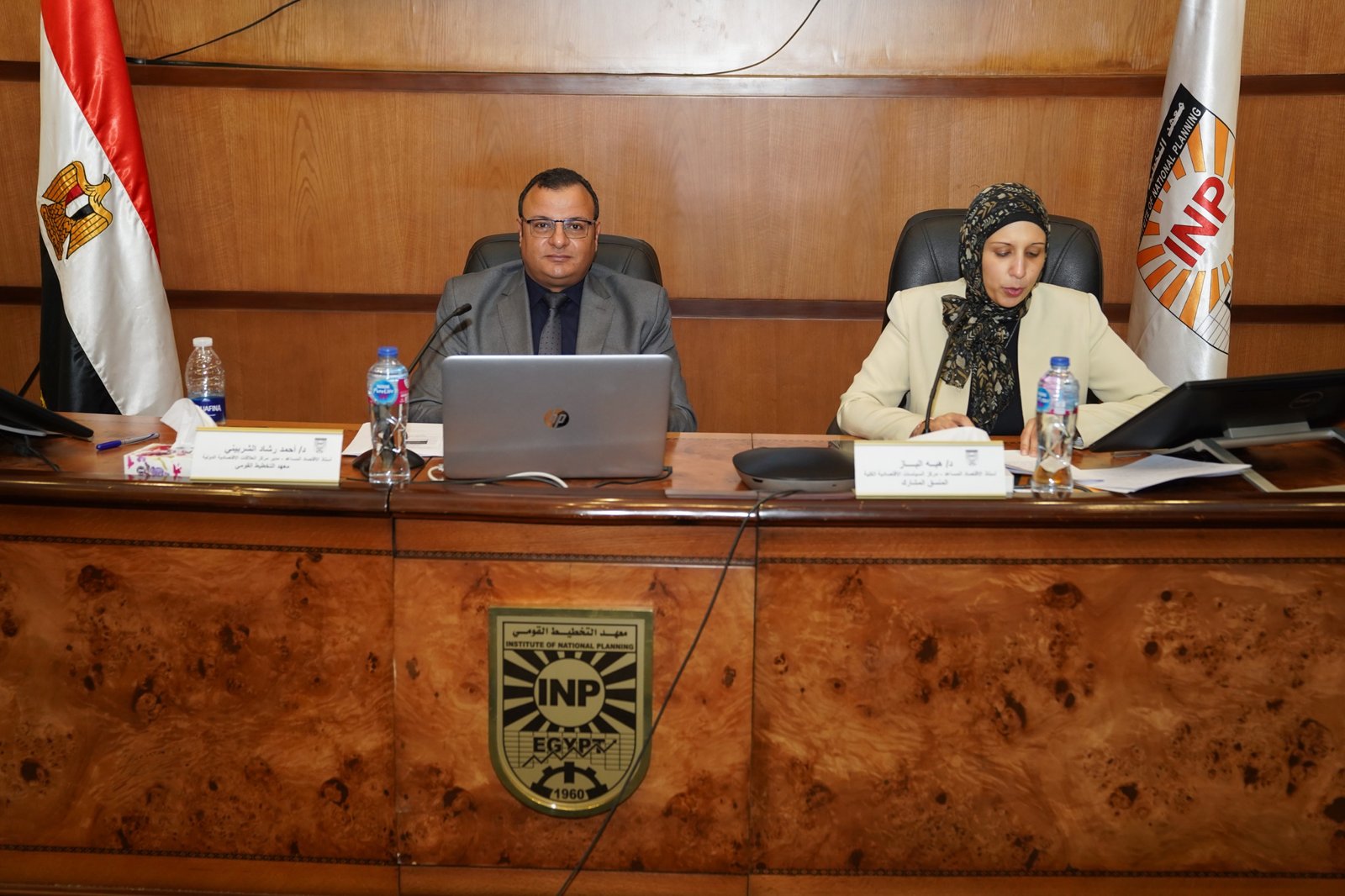
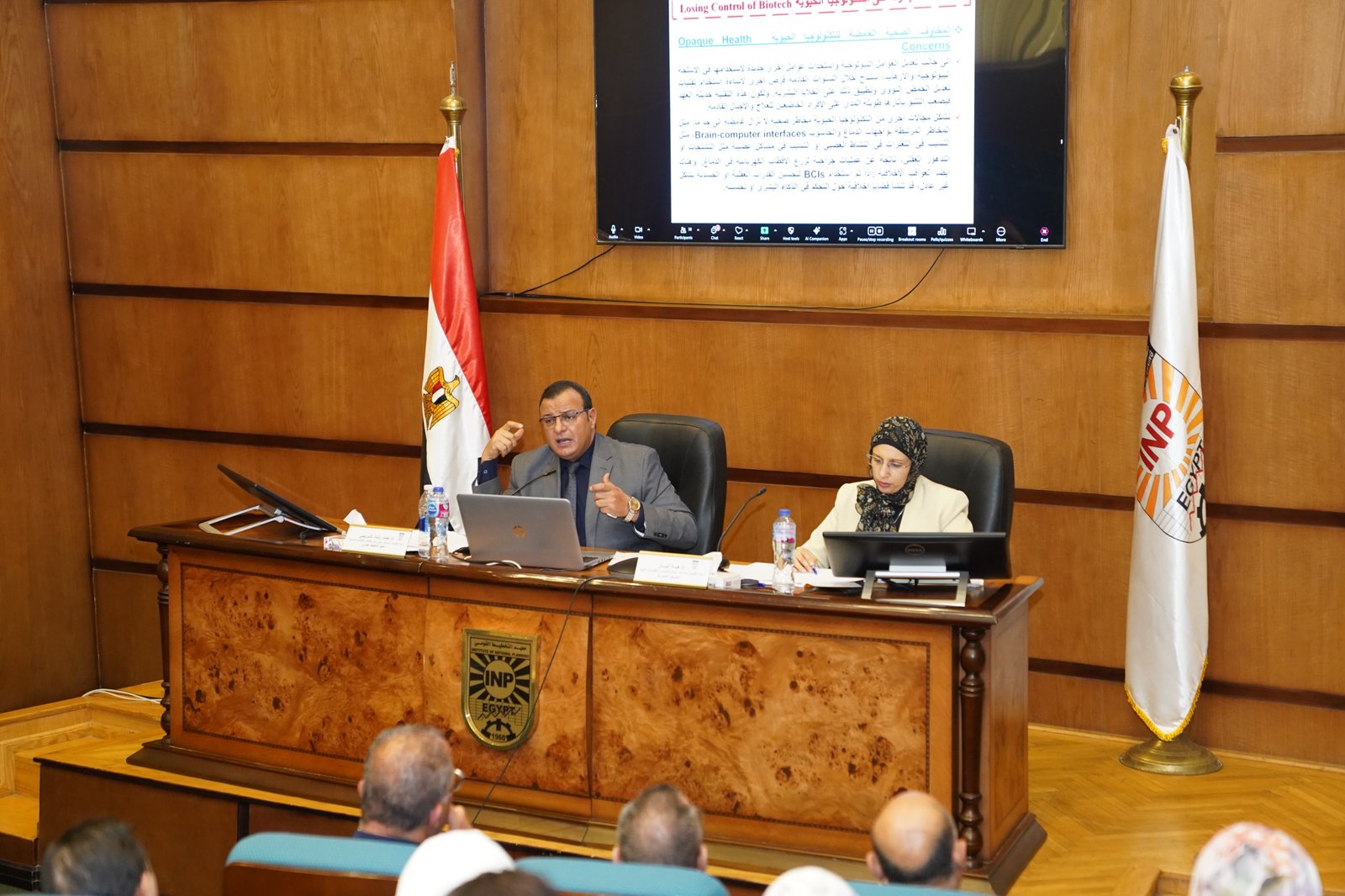
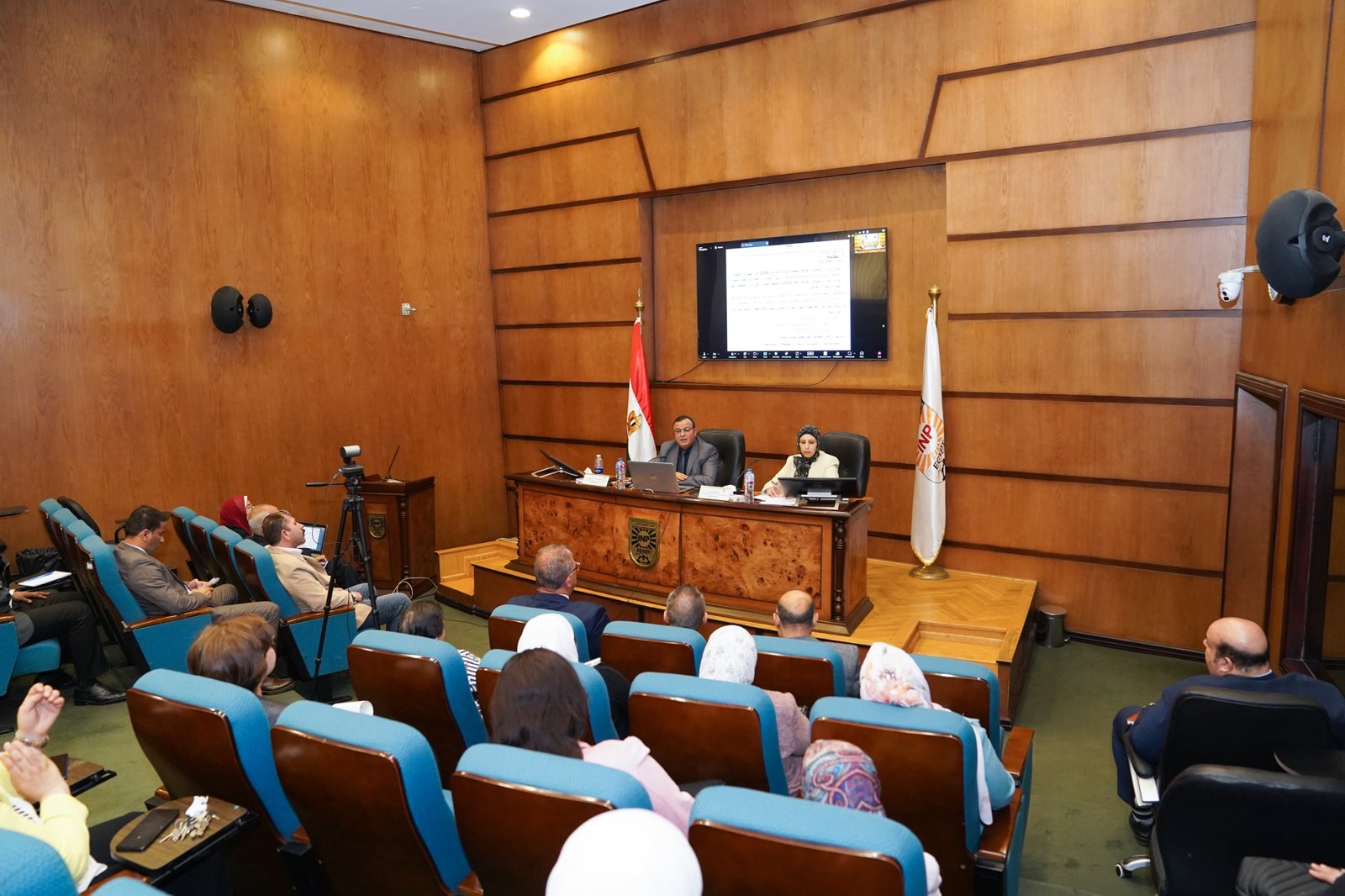
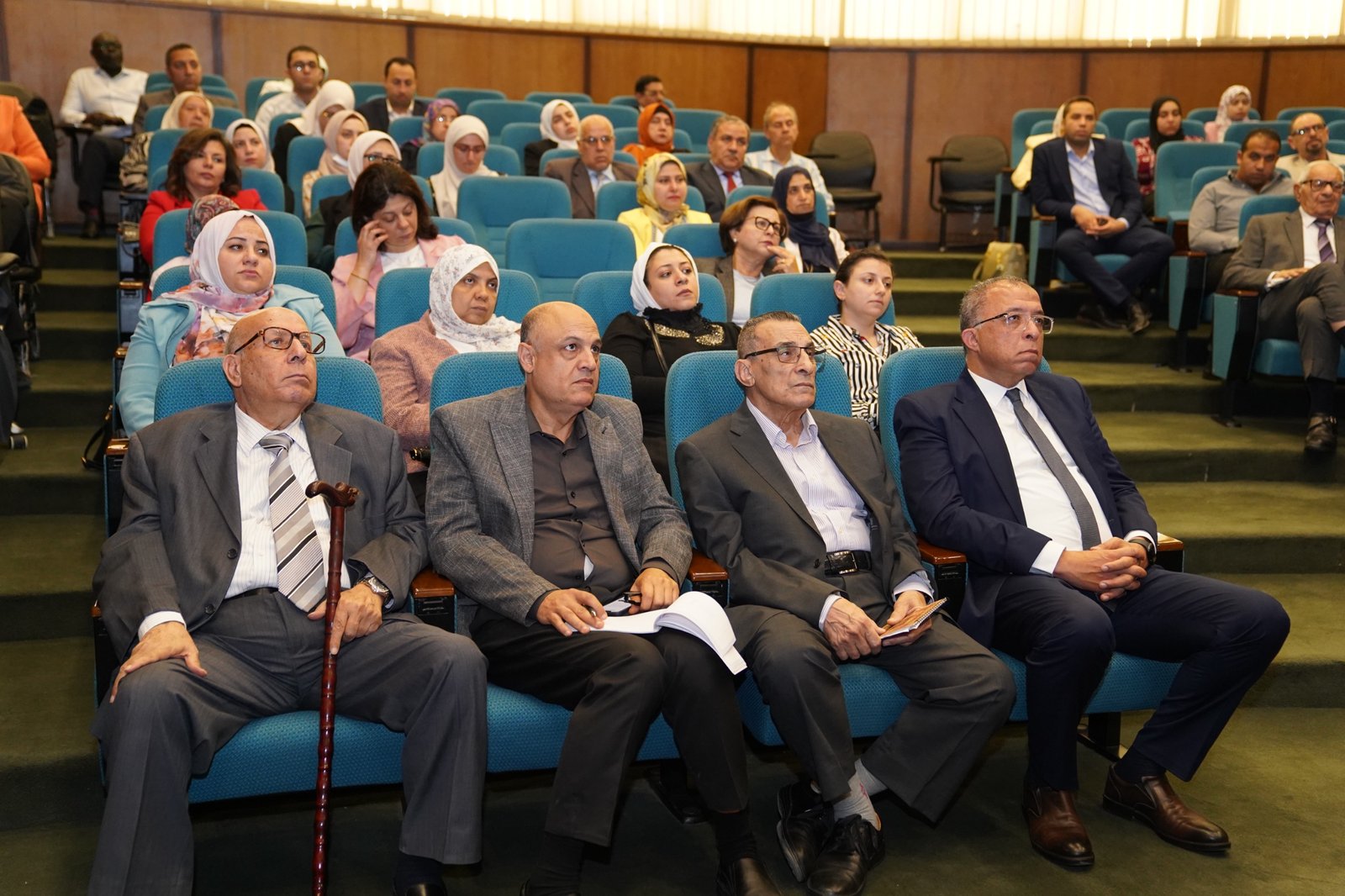
The Institute of National Planning (INP) convened its seventh Scientific Seminar of the 2024/2025 academic year to examine the World Economic Forum’s “Global Risks Report 2025.” The session featured Dr. Ahmed Rashad El-Sherbiny, Assistant Professor of Economics and Director of INP’s International Economic Relations Center, with moderation by Dr. Heba El-Baz, Assistant Professor at the Macroeconomic Policies Center. Attendees included Prof. Dr. Ashraf El-Araby (INP President), Prof. Dr. Khaled Attia (Vice President for Research and Postgraduate Studies), and distinguished experts from INP and external institutions.
Dr. El-Baz highlighted that this 20th-edition report monitors critical global risks—including armed conflicts, climate change, cyberattacks, and geo-economic confrontations—while proposing policy responses.
Dr. El-Sherbiny detailed the methodology underpinning the report:
- Utilized the Global Risks Perception Survey (GRPS), capturing insights from over 900 international experts.
- Supplemented by the Executive Opinion Survey (EOS), featuring responses from ~11,000 business leaders across 121 countries.
- Analyzed risks across three-time horizons: immediate (2025), short-term (2027), and long-term (2035).
Dr. El-Sherbiny highlighted the Key Findings of the report as follows:
- Immediate-term risks (2025): Escalating armed conflicts and extreme weather events.
- Short-term risks (2027): Geo-economic confrontations, misinformation, societal polarization, and cyber espionage.
- Long-term risks (2035): Biodiversity collapse, Earth system degradation, and uncontrolled AI/biotechnology development.
Also, the report identified four structural forces framing the global risk landscape, which are: climate change, technological acceleration, geostrategic shifts, and demographic polarization between advanced and developing nations.
Finally, the report recommended strengthening international cooperation and enhancing societal cohesion through: combating misinformation, expanding social safety nets, raising risk awareness, accelerating environmental action, and promoting responsible innovation.