


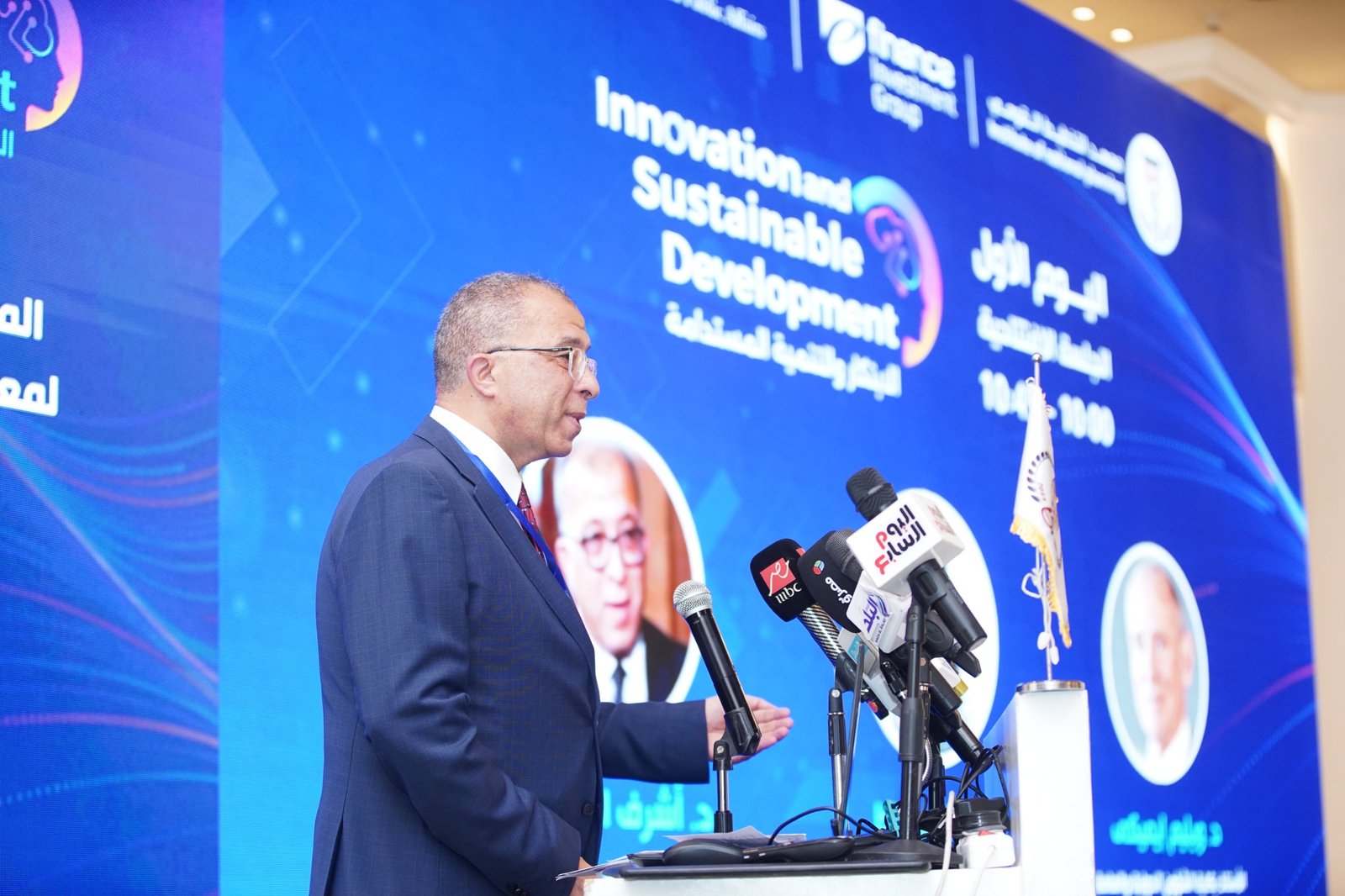
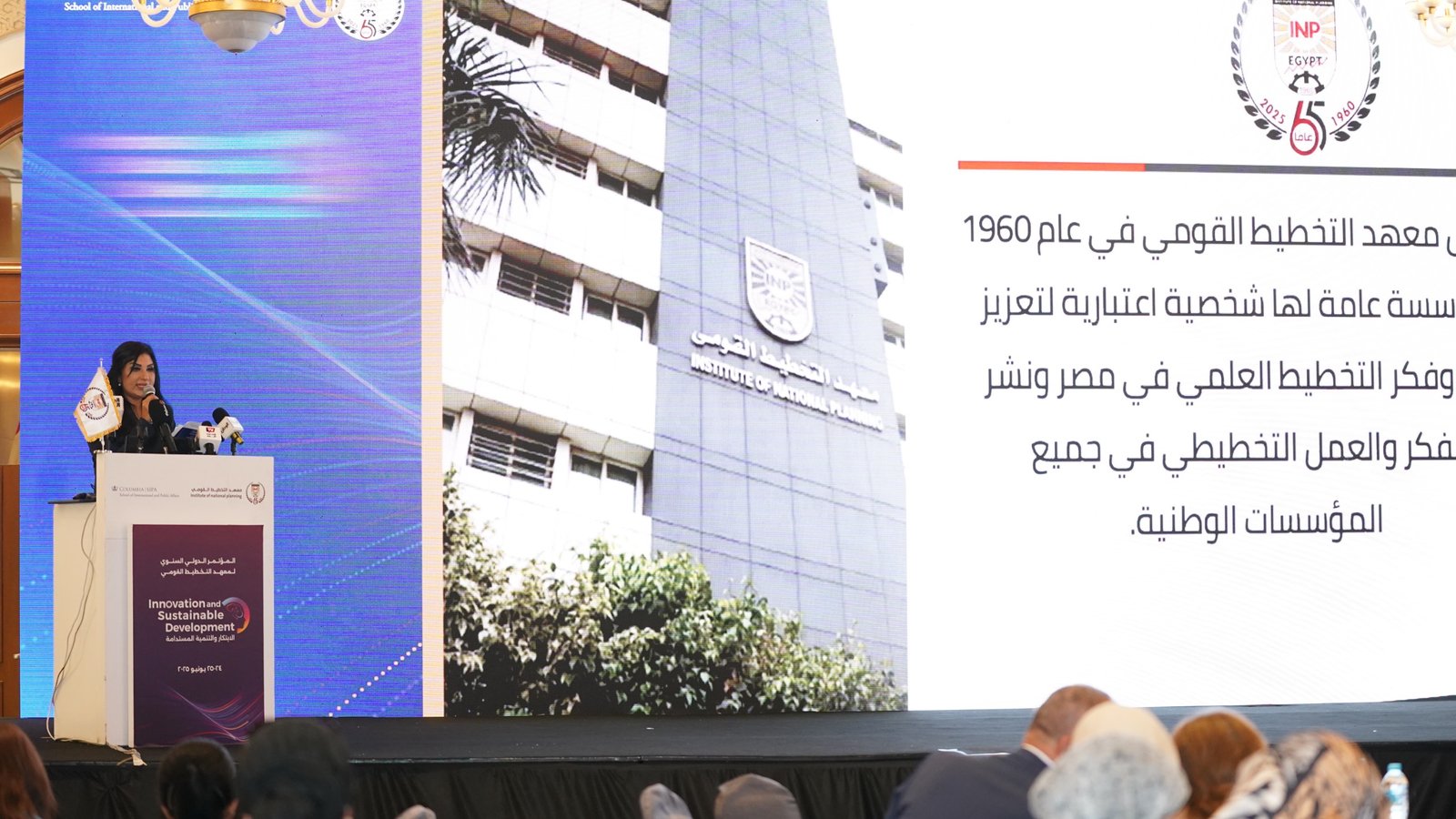
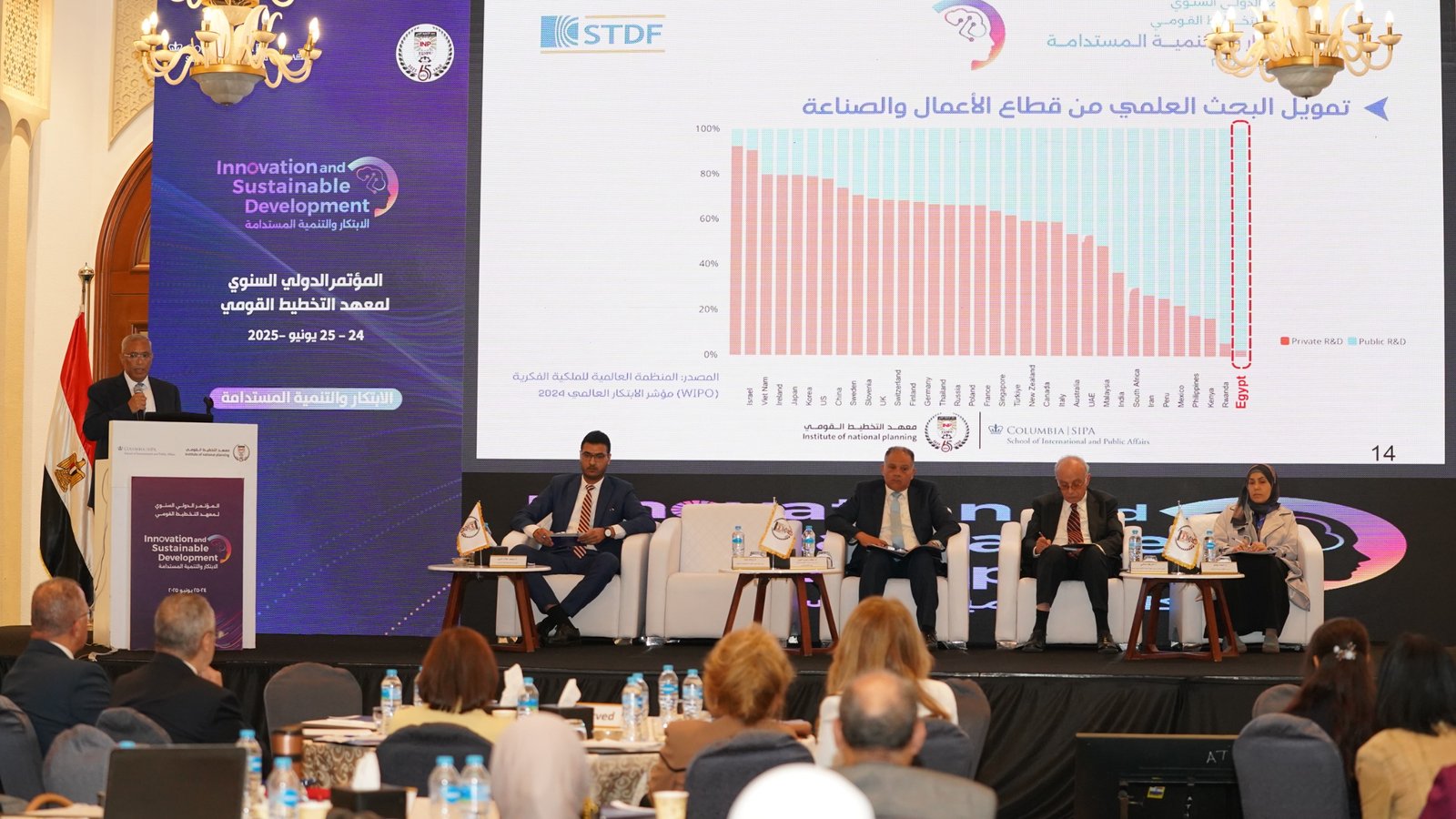
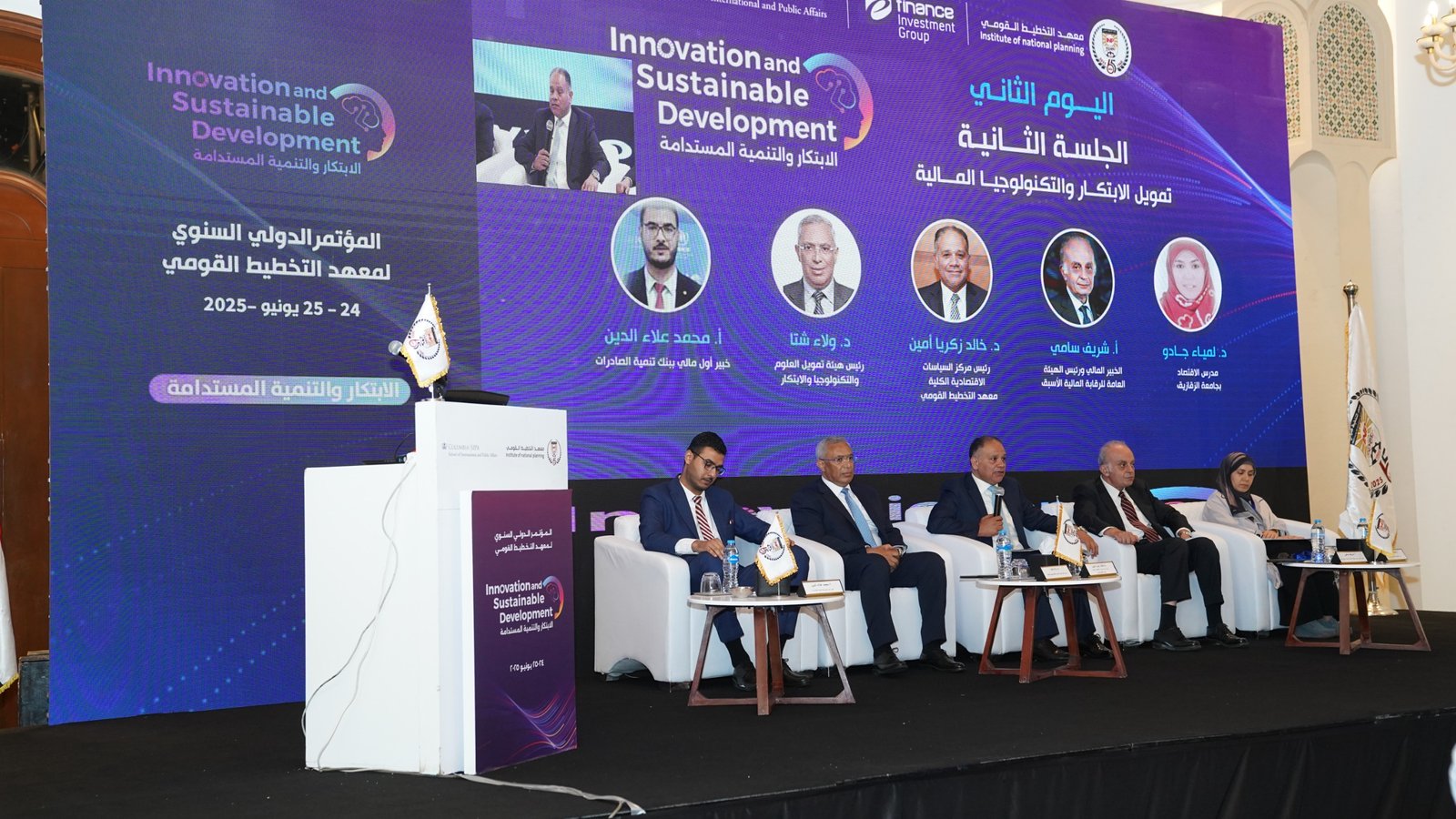
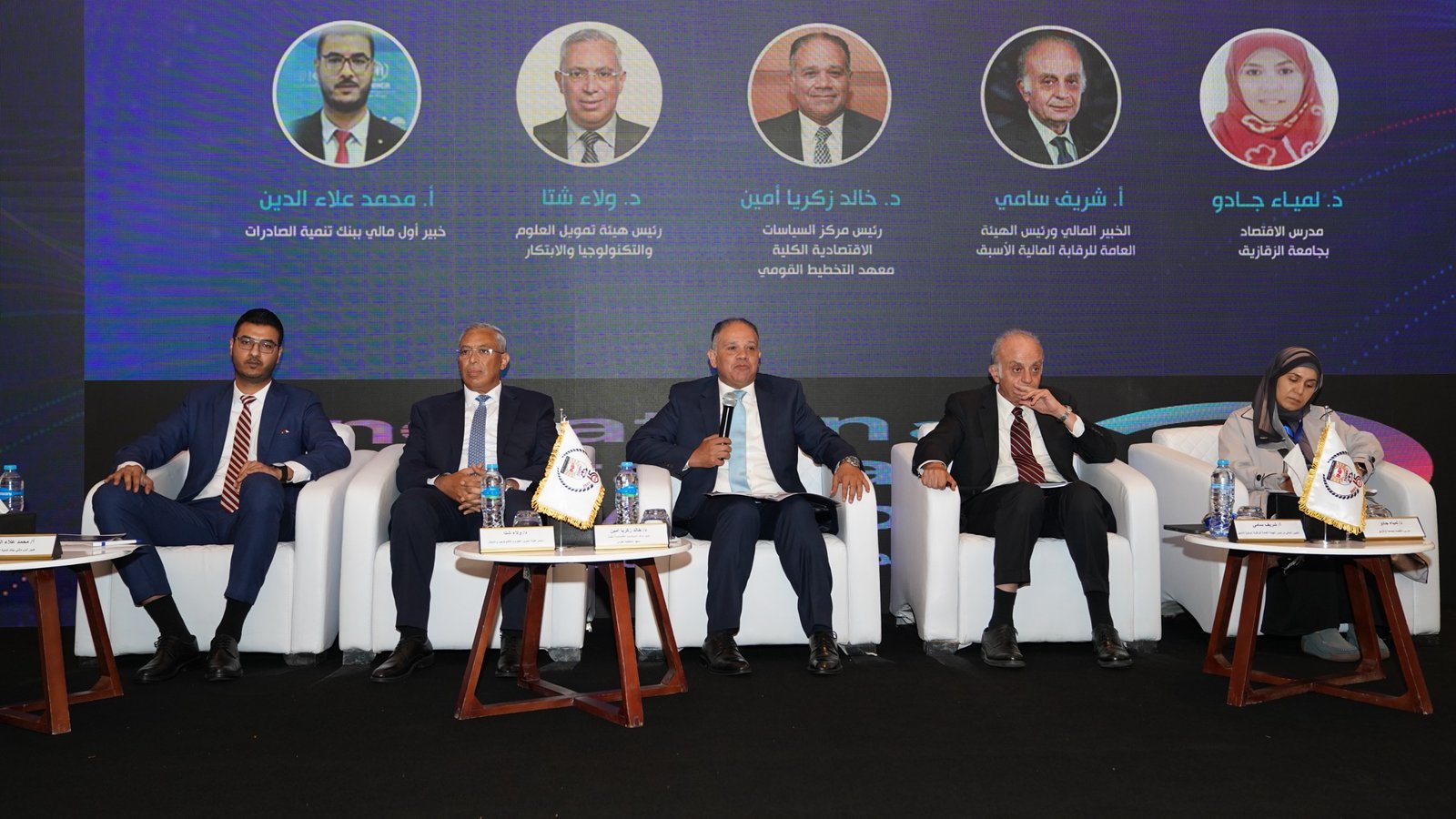
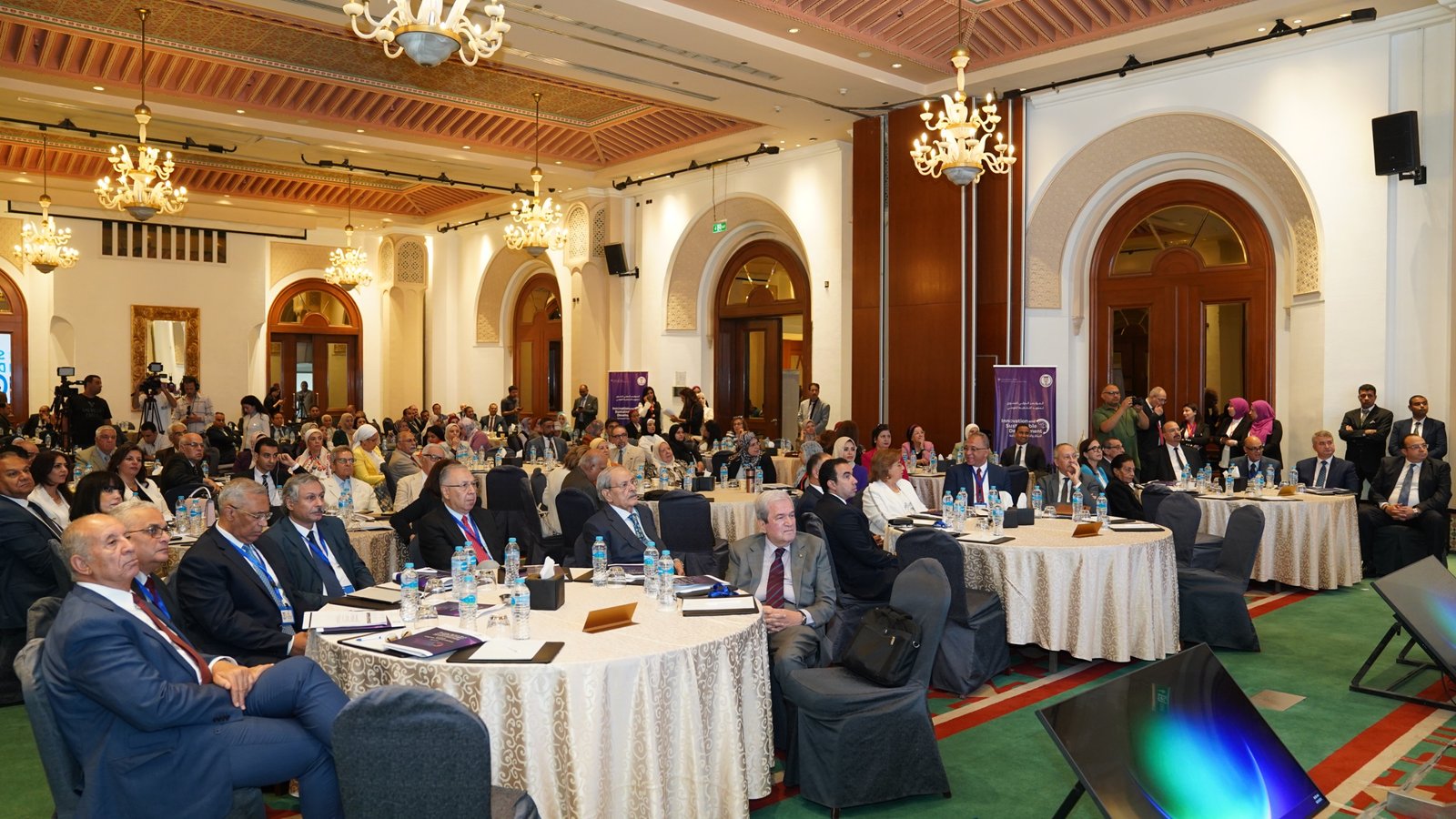

The Institute of National Planning (INP) concluded its ninth annual international conference, titled “Innovation and Sustainable Development,” in collaboration with Columbia University’s School of International and Public Affairs (SIPA). The two-day event was held in Cairo on June 24-25.
H.E. Dr. Rania Al-Mashat, Minister of Planning, Economic Development, and International Cooperation and Chairperson of INP’s Board of Trustees, contributed in the conference along with a distinguished group of high-level policymakers, decision-makers, public figures, and experts from various Egyptian ministries, agencies, and universities, as well as representatives of international and regional organizations involved in innovation and scientific research.
The conference featured discussions on 14 research papers and five presentations across six scientific sessions and a panel discussion, addressing innovation from multiple perspectives. Key themes included:
Innovation and Scientific Research: Developmental Dimensions and International Experiences
Green Innovation for Sustainable Development
Fintech Innovations and Sustainable Development
Social Innovation and Sustainable Development
Financing Innovation and Fintech
Production Technology Transfer as a Catalyst for Sustainable Development
Innovation and Emerging Technologies
The sessions showcased the diversity, specialization, and expertise of the participating scholars and professionals.
The conference issued a set of key messages and recommendations, proposing executive mechanisms to foster innovation at the macro level, outlining requirements for a conducive business environment, and identifying ways to strengthen roles and systems within the national innovation ecosystem. It also highlighted mechanisms for embedding sustainable innovation cultures and practices at the organizational level.
During the closing session, Dr. Ashraf El-Araby, President of the Institute of National Planning, emphasized that innovation is a national security priority for Egypt, constituting a fundamental component of the country’s strategic agenda. He noted that Greater Cairo’s recognition as a regional innovation hub—ranking among the top 100 global cities in innovation indices—marks significant progress, positioning Egypt as a leading innovation center in the Middle East and Africa.
Dr. El-Araby stressed the need to align innovation with Egypt’s Vision 2030, particularly its economic pillar of “Knowledge, Innovation, and Scientific Research,” to transition toward a technology-driven, high-value knowledge economy. He highlighted the importance of enhancing institutional and legislative governance for innovation, including the effective implementation of Innovation Incentives Law No. (23) and the National Sustainable Innovation Policy. The formation of the Higher Council for Innovation, chaired by the President of Egypt, was cited as a pivotal step toward a sustainable innovation framework.
He further emphasized that true sustainability in innovation and development requires building robust institutions—rather than relying on individuals—to ensure policy continuity amid leadership changes. Innovation, he noted, extends beyond technology to include sustainable business models, social innovation, and environmental innovation, necessitating cross-sectoral coordination in industry, agriculture, and services.
Dr. El-Araby underscored the importance of inclusivity by integrating youth and regional universities into the innovation ecosystem, promoting knowledge equity and balanced development. He also called for addressing gender disparities in innovation through gender-sensitive policies and greater female participation in research and innovation.
In closing, he highlighted the critical role of public and private financing for innovation. While government funding remains essential, international experience shows that the private sector is the primary partner in financing innovation. Thus, Egypt must create an enabling environment for private investment in R&D while increasing public spending beyond constitutional benchmarks.