


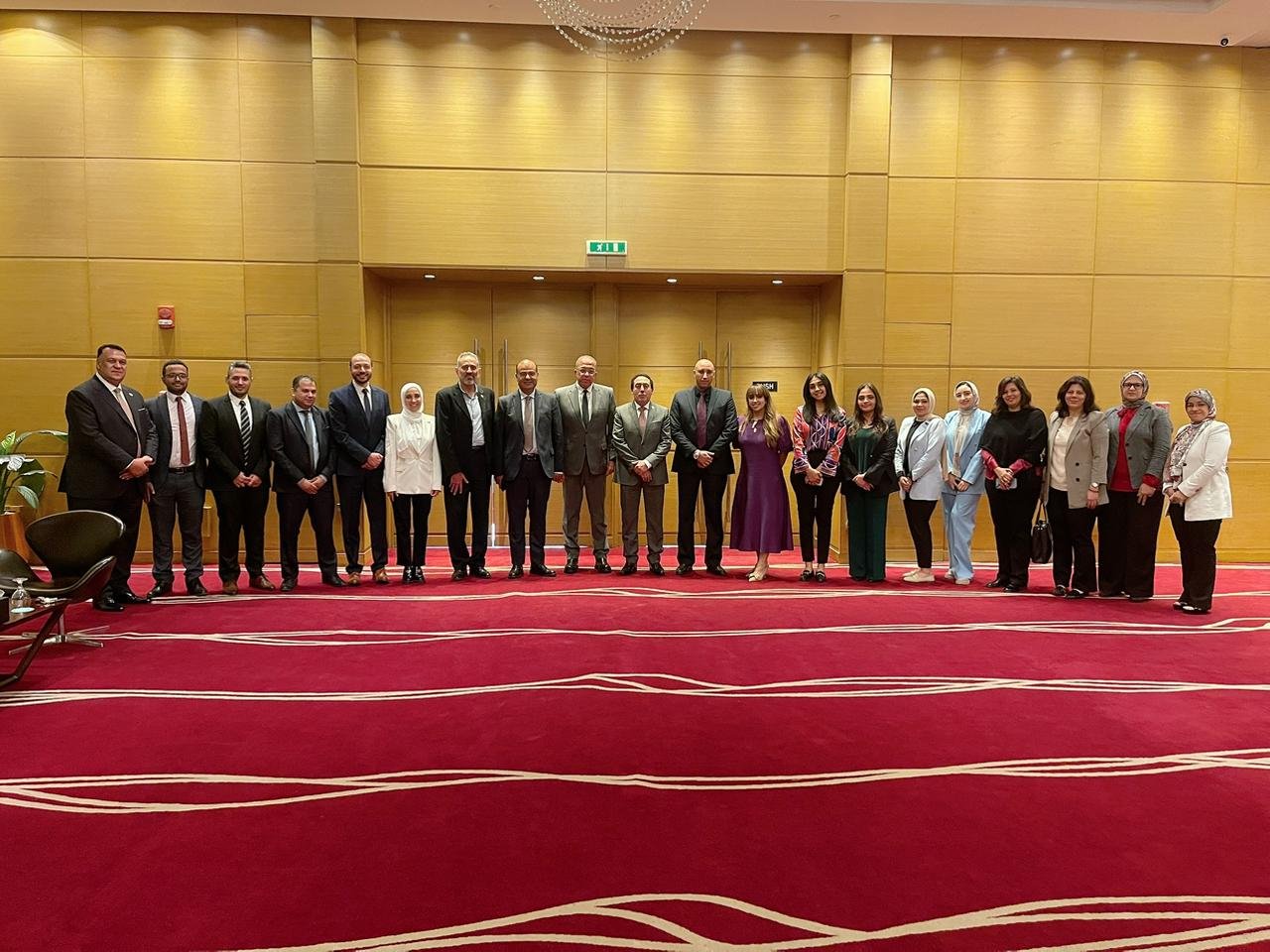
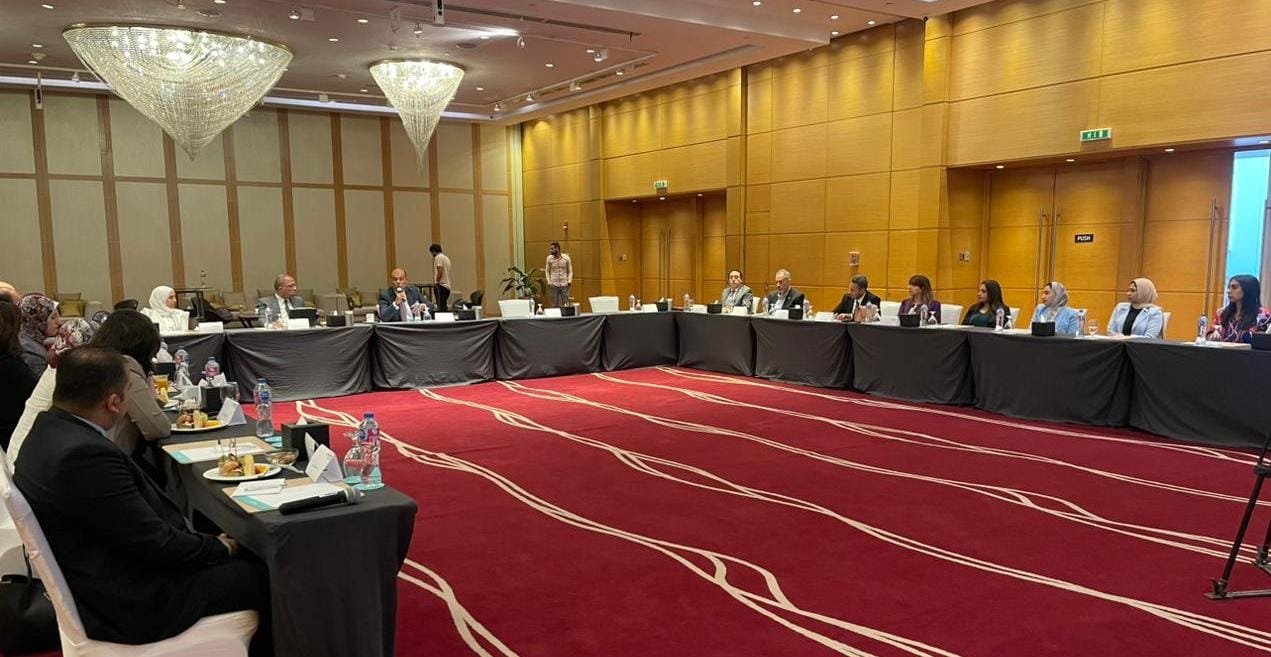
Professor Dr. Ashraf El-Araby, President of the Institute of National Planning (INP), participated in a high-level dialogue session to discuss a study titled “Comprehensive Study of the Tobacco Market in Egypt,” prepared by the Economics for Health Initiative at Johns Hopkins University. This engagement aligns with INP’s commitment to supporting evidence-based public policies.
The study was developed to analyze the structure of Egypt’s tobacco market, understand consumption patterns, and assess compliance levels with regulatory policies – thereby contributing to evidence-informed public policy formulation.
The session was moderated by Professor Dr. Khaled Hanafy, Lead Researcher, who presented the study’s key findings. Dr. Hanafy emphasized the critical importance of enhancing tax and regulatory policies, strengthening institutional coordination among relevant stakeholders, and expanding the scope of data used in formulating public policies for the tobacco sector.
During the discussion of the findings, Professor Dr. Ashraf El-Araby underscored the necessity of adopting an integrated economic approach when designing tobacco-related tax policies. He highlighted the value of leveraging econometric models and Computable General Equilibrium (CGE) models, which provide precise analytical tools for estimating the potential economic impacts of various policy options.
Responding to a question about INP’s role in this field, Dr. El-Araby explained that the institute, through its Economic Modeling Unit, develops advanced quantitative models. These models estimate price elasticity of demand, simulate diverse tax scenarios, and evaluate the macroeconomic impacts of proposed policies. This work supports evidence-based decision-making by providing scientifically analyzed policy alternatives.
The study under discussion was prepared by an Egyptian research team led by Professor Dr. Khaled Hanafy – Secretary General of the Union of Arab Chambers. The team included Professor Dr. Sarah El-Gazzar – Dean of the Faculty of International Transport and Logistics at the Arab Academy for Science, Technology and Maritime Transport (AASTMT), Dr. Mahmoud Barakat, Dr. Ahmed Eid, Dr. Shehab Mahmoud, Ms. Dina El-Wakkad.
The research relied on a rigorous field study covering fourteen Egyptian governorates. Data was collected using modern scientific methodologies to ensure a representative and comprehensive understanding of Egypt’s tobacco market dynamics.
The session also featured participation from experts representing the Ministries of Health and Finance, INP, the Information and Decision Support Center (IDSC), the Egyptian Tax Authority, the Egyptian Customs Authority, and several civil society organizations focused on health and public policy.
It is noteworthy that INP previously contributed to the launch of the report “The Economics of Tobacco and Tobacco Taxation in Egypt.” This effort was part of a project initiated by the Health Policy Research Institute at the University of Illinois Chicago (UIC) – a partner in the Bloomberg Initiative to Reduce Tobacco Use – in collaboration with the Center for Social Policy and Development (CSPD) and the World Health Organization (WHO). The project aimed to develop tobacco policies given their significant impact on low- and middle-income countries, which record the highest tobacco consumption rates, such as Egypt, Lebanon, and Jordan