


*Under the Umbrella of Egypt Beyond 2025: A Long-Term Development Vision*
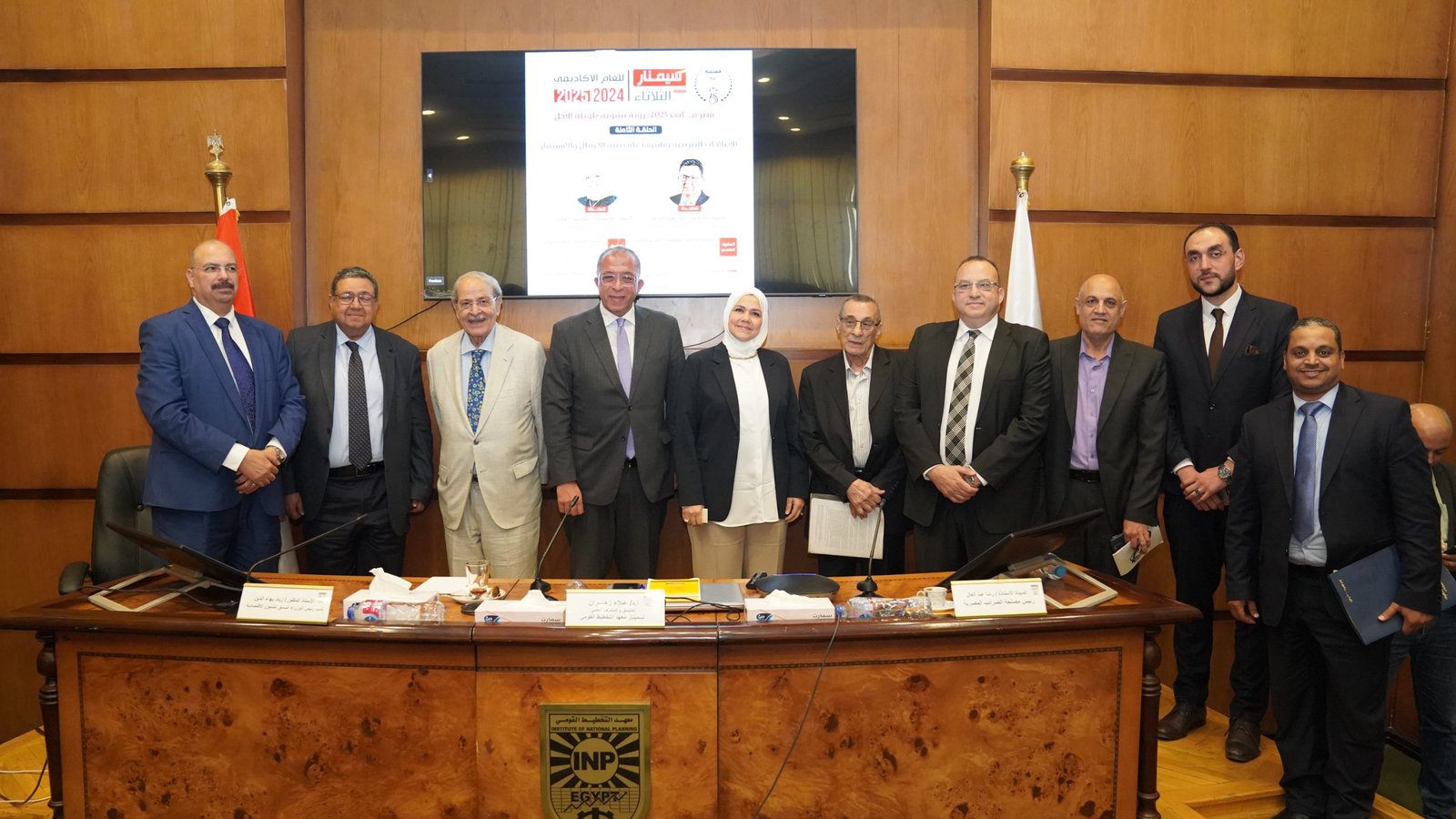
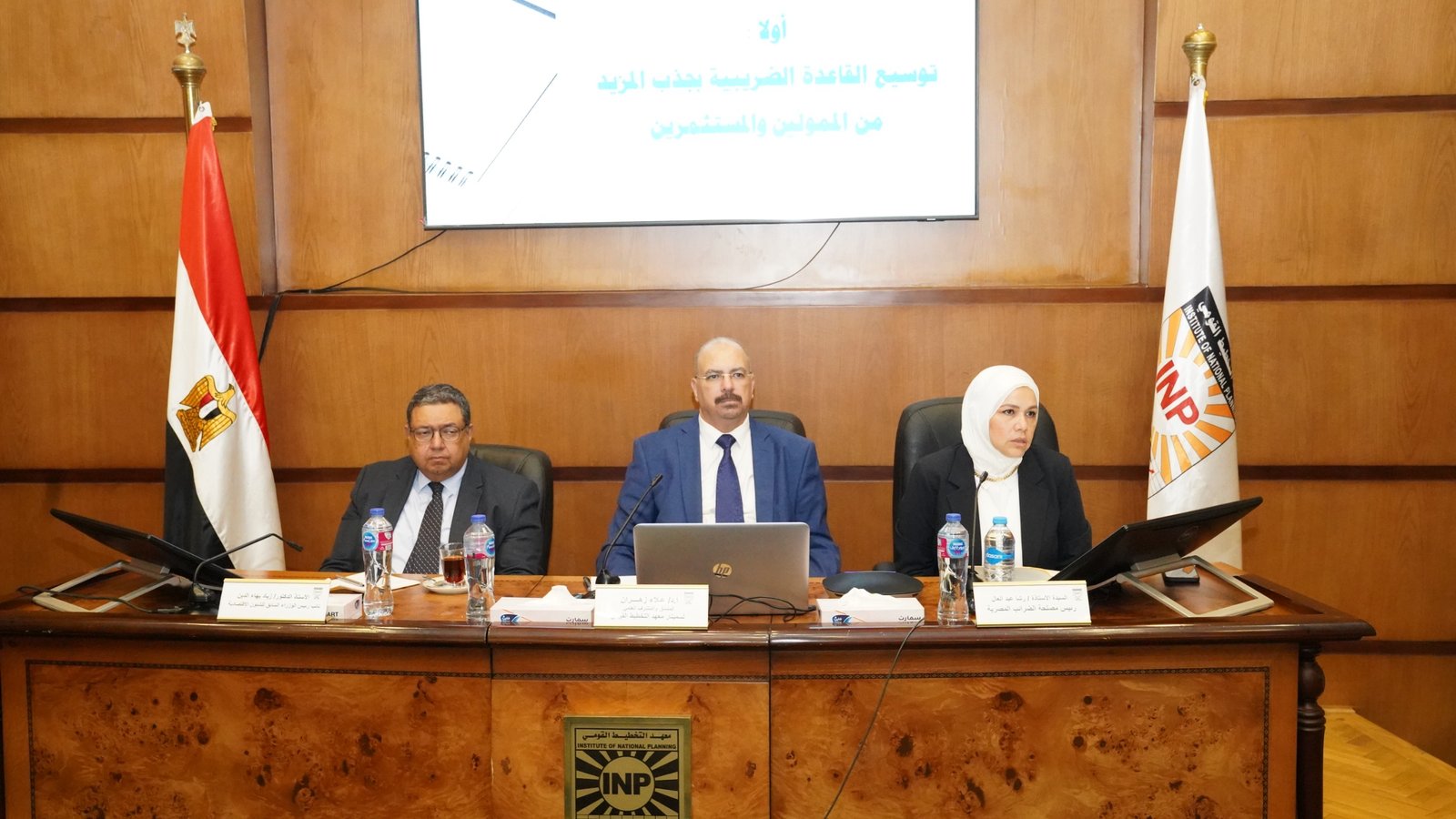
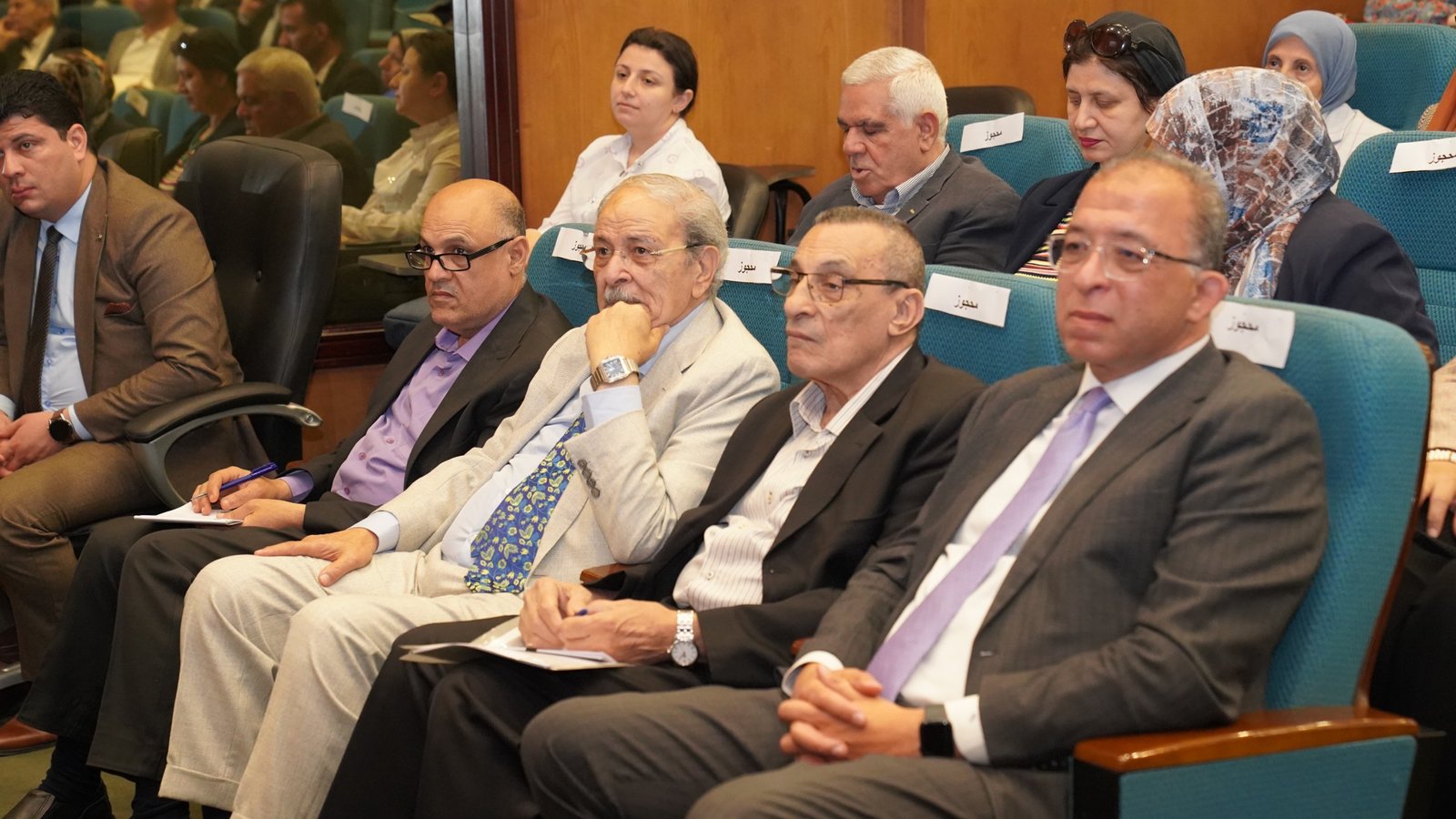
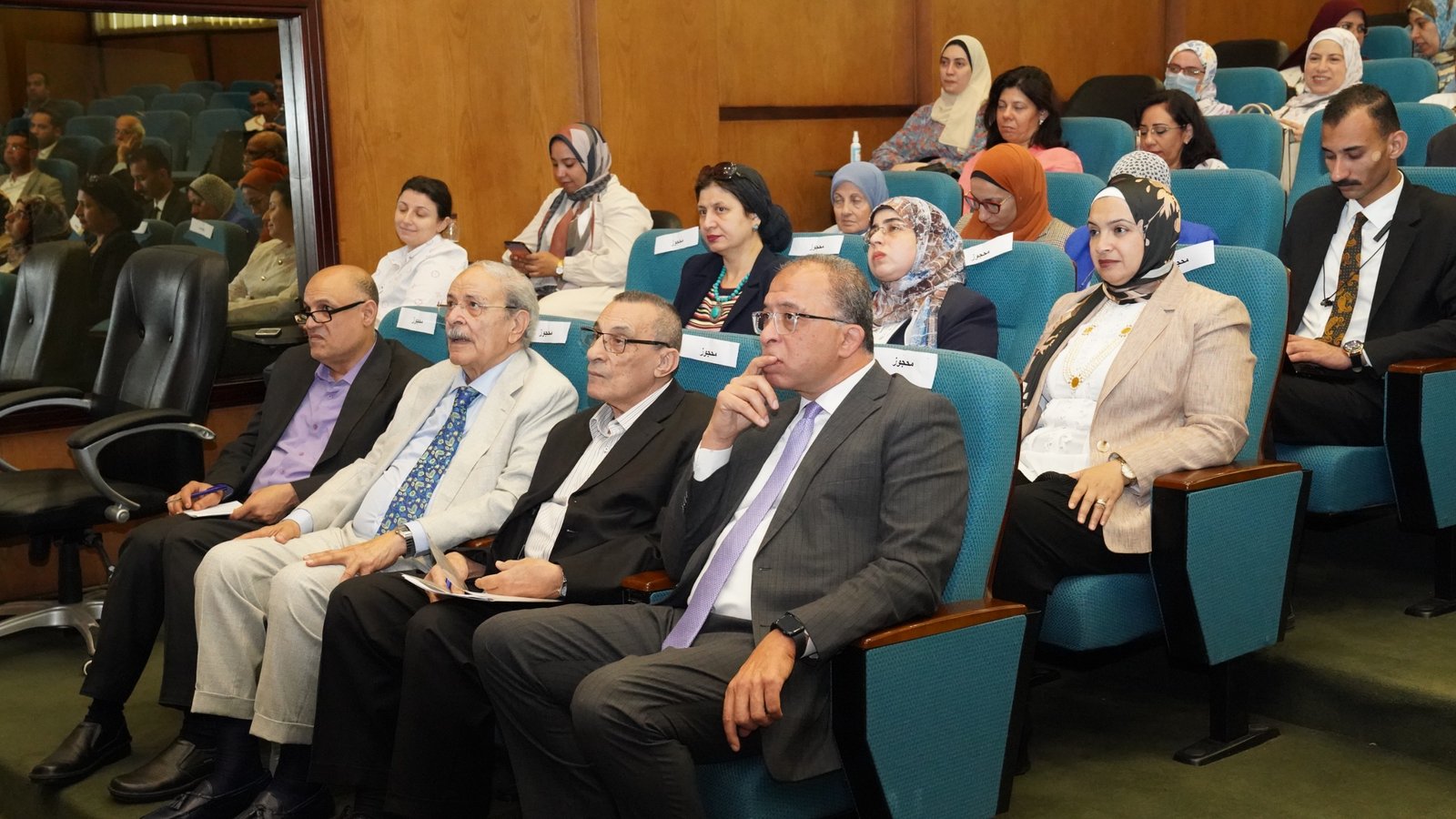
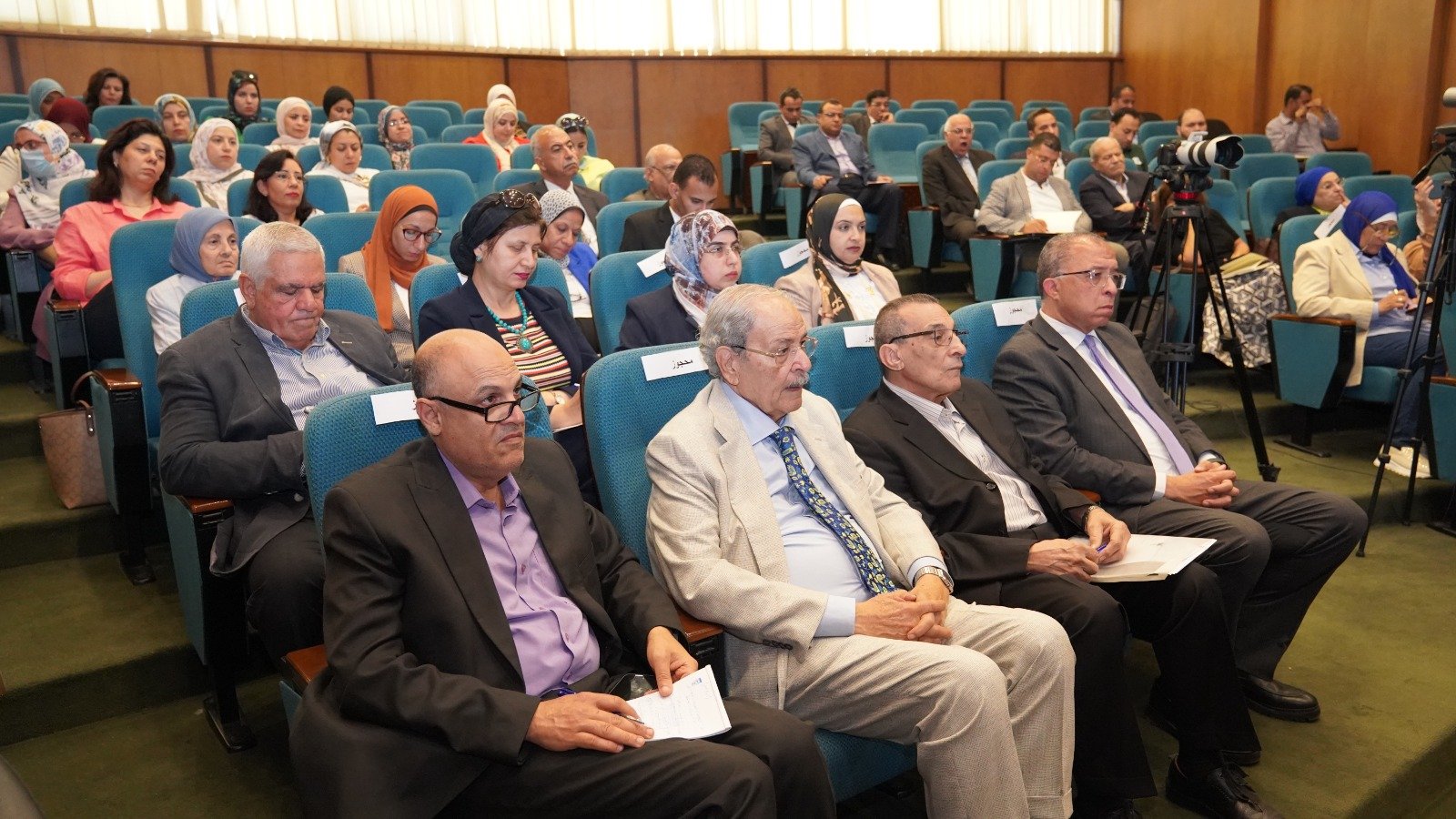
The Institute of National Planning (INP) hosted the eighth session of its Tuesday Seminar Series for the 2024/2025 academic year, focusing on “Tax Reforms and Their Impact on Business and Investment Climate” as part of the Egypt Beyond 2025: A Long-Term Development Vision project. The seminar featured Dr. Ziad Bahaa El-Din, Former Deputy Prime Minister for Economic Affairs, and Ms. Rasha Abdel Aal, Head of the Egyptian Tax Authority, with moderation by Dr. Alaa Zahran, Professor at the Macroeconomic Policies Center and Scientific Coordinator of the Seminar. The event was attended by Prof. Ashraf El-Araby, President of INP, Prof. Ashraf Salah El-Din, INP Vice President for Training, Consultations, and Community Services, Prof. Khaled Attia, INP Vice President for Research and Graduate Studies and distinguished economists, tax experts, INP faculty members, and stakeholders.
Dr. Alaa Zahran opened the session by emphasizing that tax reforms serve as critical tools to:
- Enhance business incentives and improve investment climate
- Broaden the tax base by attracting more taxpayers and investors
- Restore business community trust and encourage tax compliance
- Facilitate the transition from informal to formal economy
- Balance efficiency with social equity considerations
Ms. Rasha Abdel Aal outlined the Egyptian Tax Authority’s strategy, which focuses on:
- Horizontal expansion of the tax base through formalizing informal economic activities
- Digital transformation successes, enabling better tracking of financial transactions
- Law No. 159 of 2023, which eliminated tax exemptions for state-owned economic activities to ensure competitive neutrality
- Tax facilitation packages to promote fairness, partnership, and ease of compliance nationwide
She stressed that “the tax system’s success requires genuine partnership with the business community” through:
- Building trust between taxpayers and authorities
- Implementing taxpayer-friendly procedures
- Resolving legacy tax cases through flexible mechanisms
- Encouraging voluntary compliance to expand the tax base
Dr. Ziad Bahaa El-Din presented a philosophical perspective, stating that “taxes represent an economic expression of citizenship” within the state-citizen social contract. His key observations included:
- Tax exemptions should be temporary and justified, as they deprive the state of resources and create social biases
- Despite regulatory safeguards, outdated fees still hinder investment and require systematic review
- Trust-building measures between tax authorities and businesses are essential for reform success
He further noted that despite the existing prohibition on regulatory bodies issuing decisions that impose new financial or procedural burdens – including fees or service charges related to business establishment/operation or their modification – without prior approval from the General Investment Authority’s board, the Cabinet, and the Supreme Investment Council, certain legacy fees continue to hinder investment operations and obstruct achievement of strategic objectives, representing a persistent implementation challenge.
The speaker emphasized the critical importance of fostering trust-based partnerships between the tax authority and business community through concrete measures including: (1) implementing taxpayer facilitation procedures, (2) resolving legacy cases through flexible settlement mechanisms, and (3) expanding the tax base by incentivizing voluntary compliance rather than through coercive measures. This approach, he stressed, would create a more conducive environment for sustainable investment growth while maintaining fiscal responsibility.
This session reinforced INP’s role in shaping evidence-based fiscal policies to support Egypt’s long-term development vision, aligning with the Egypt Beyond 2025 strategic framework. The insights will inform ongoing dialogues between policymakers, tax administrators, and private sector stakeholders. The seminar series contributes to INP’s mission of providing platforms for knowledge exchange on critical economic transformation issues.